2026-09-23
From SMILE LASIK 'Quality of Vision' to Cataract Surgery: ESCRS 2026 Lectures
Explore Dr. David Sung Yong Kang's ESCRS 2026 lectures on advancing SMILE LASIK visual quality, custom optical zones, Plasma SMILE, and long-term planning for future cataract surgery in post-refractive eyes.

Hello, this is Eyereum Eye Clinic Gangnam.
When researching SMILE LASIK, you encounter various surgical methods and devices, ranging from SMILE and SMILE Pro to more recent options like Smart LASIK and New SMILE LASIK.
However, even with the same 20/20 (1.0) visual acuity, there can be differences in the actual perceived "quality of vision," including clarity and light distortion (halos and glare). This is why a meticulous surgical plan—incorporating laser energy levels, irradiation methods, optical zone design, and individual corneal characteristics—is crucial.
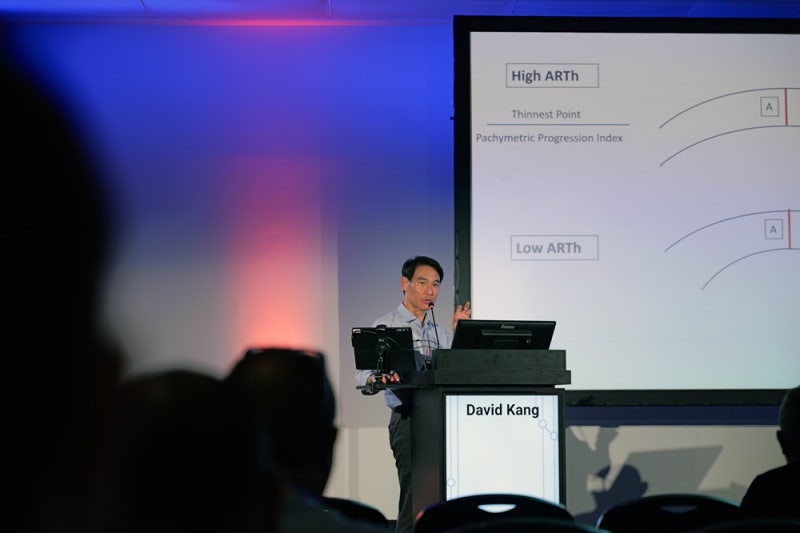
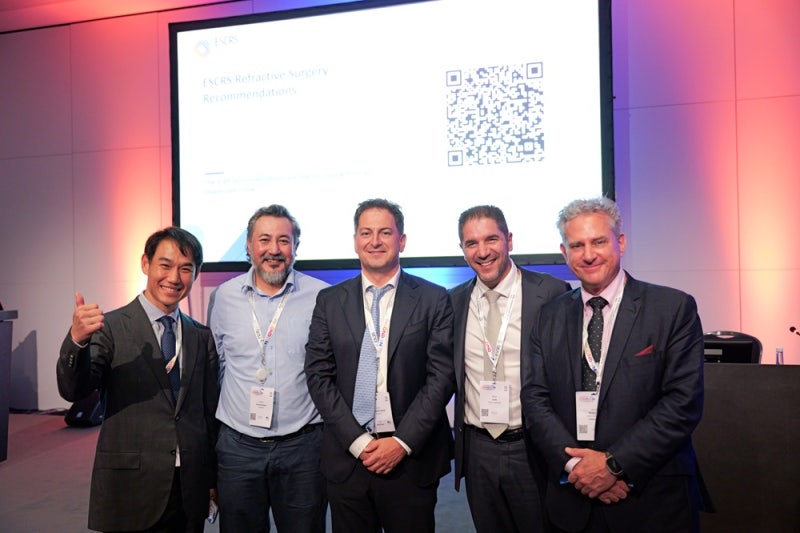
Eyereum Eye Clinic has consistently pursued research to enhance this "quality of vision." Dr. David Sung Yong Kang recently participated as a speaker across three sessions, including two official Instructional Courses and an Industry Symposium, at the 2026 European Society of Cataract and Refractive Surgeons (ESCRS 2026) congress held in London, UK.

The Instructional Course is an official educational program of the ESCRS, where leading ophthalmologists share practical clinical experience and surgical expertise with eye specialists from around the world. Dr. David Sung Yong Kang participated as an instructional speaker in the field of KLEx.
Here are the three key research studies and surgical strategies presented at this year's ESCRS.
SMILE LASIK in Your 20s and 30s: Considering Cataract Surgery Decades Later — Planning the Second Lifetime Surgery: When KLEx Patients Become Cataract Patients
The first Instructional Course was titled "REFRACTIVE FOOTPRINTS: OPTIMIZING CATARACT SURGERY IN POST-LASER EYES."
Undergoing laser refractive surgery such as SMILE LASIK at a young age can alter corneal curvature and optical characteristics. These changes can influence intraocular lens (IOL) power calculations and overall surgical planning when undergoing cataract surgery decades later.
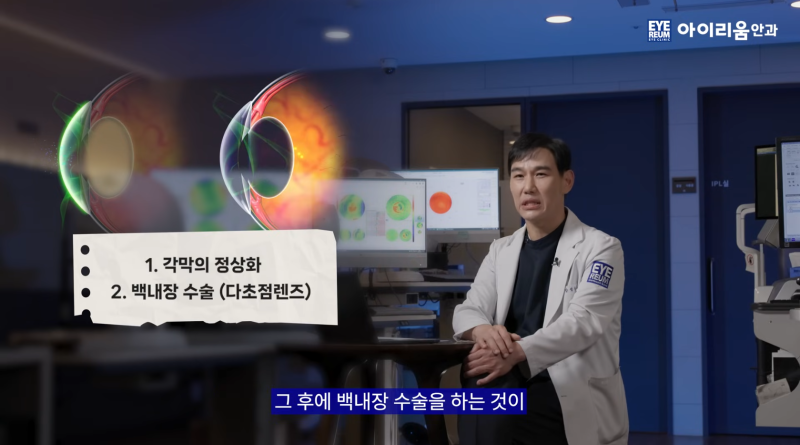
Therefore, the session highlighted the importance of designing laser refractive surgery with a long-term perspective, accounting not only for current visual acuity but also for future cataract surgery.
In practice, when planning cataract surgery for patients who have previously undergone refractive surgeries like LASIK or LASEK, comprehensive evaluation using corneal topography and higher-order aberration analysis is vital to identify potential causes of glare, halos, or reduced contrast sensitivity.
For further details on pre-cataract comprehensive examinations and surgical planning for first-generation LASIK patients, please refer to Dr. David Sung Yong Kang's medical column.
Read Dr. David Sung Yong Kang's Medical Column in Detail ▼
SMILE LASIK: Strategies for a More Precise Procedure — The Art of the (Almost) Perfect KLEx
In the second Instructional Course, Dr. Kang delivered a presentation titled "The Art of the (Almost) Perfect KLEx: Surgical Strategies for Flawless Lenticule Extraction."
KLEx (Keratorefractive Lenticule Extraction) is a vision correction method where a refractive lenticule is created within the corneal stroma and removed through a micro-incision. Procedures such as SMILE, SMILE Pro, and SmartSight NOVA belong to this category.
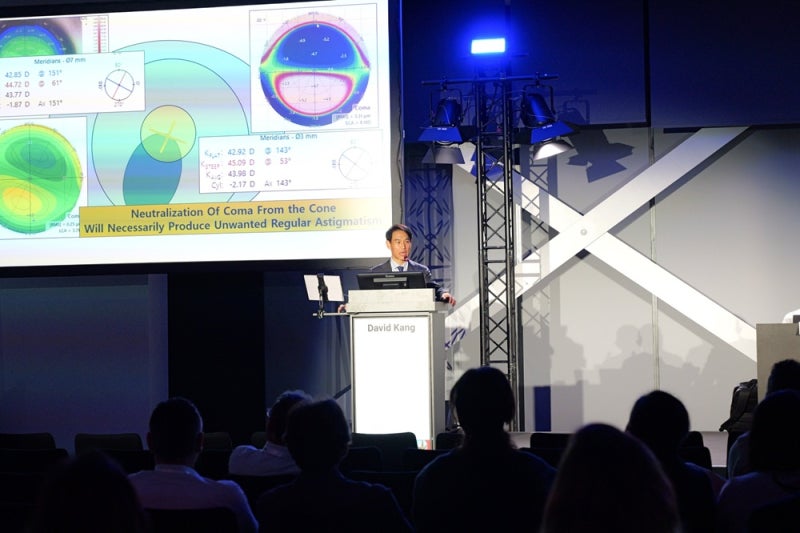
During this lecture, he emphasized that surgical outcomes in SMILE and SMILE Pro are not determined by laser hardware alone; rather, they require a comprehensive approach considering laser delivery patterns, optical zone design, individual corneal properties, and post-operative higher-order aberration changes.
In particular, he introduced the research conducted by Eyereum Eye Clinic's team aimed at enhancing visual quality, including novel optical zone calculation methods designed to customize optical zones based on individual corneal morphology and refractive error.
Plasma SMILE: Advancing the "Quality of Vision" — Refractive Technology & More: Seeing Around Corners
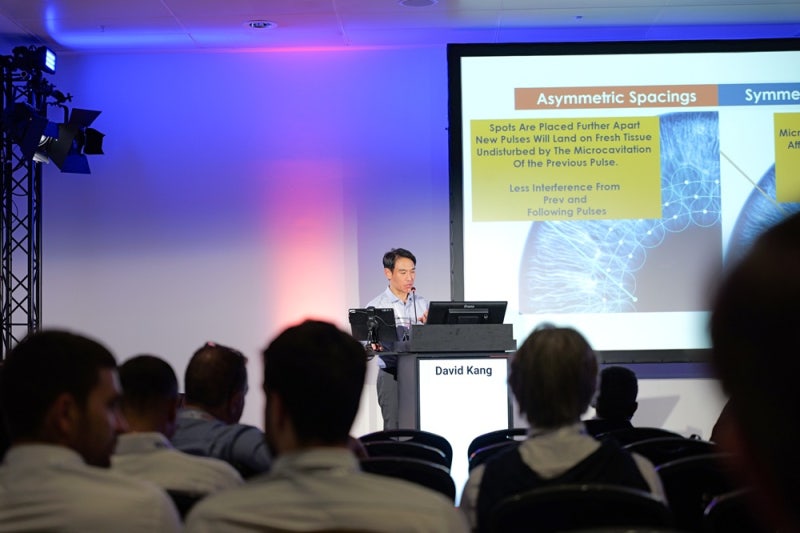
At the industry symposium "Refractive Technology & More: Seeing Around Corners," an official part of the ESCRS program, Dr. Kang presented next-generation SMILE LASIK research focusing on "PLASMA KLEx" and laser irradiation strategies.
The Plasma SMILE study goes beyond merely reducing laser pulse energy; it focuses on improving post-operative visual quality by finely tuning laser spot spacing and scanning patterns.
Based on clinical data comparing conventional delivery methods with new patterns, he analyzed post-operative optical changes—such as higher-order aberrations and coma aberrations—outlining the future direction of SMILE LASIK, which aims not just for 20/20 on the eye chart, but for clearer, superior visual quality.
Precise Surgical Planning Determines the "Quality of Vision" in SMILE LASIK
Refractive surgery platforms and techniques—including SMILE, SMILE Pro, and Smart NOVA—continue to evolve.
However, using the latest platform does not mean a uniform surgical plan can be applied to every eye.
It is essential to conduct thorough preoperative examinations to analyze the structural and optical characteristics of the cornea, and to examine how precisely surgical parameters—such as laser energy, delivery mode, and optical zones—are tailored to the individual eye.
Based on clinical research published in peer-reviewed SCI journals and high-precision diagnostic data, Eyereum Eye Clinic is committed to delivering refractive surgery that looks beyond target visual acuity to ensure superior visual quality and accommodate long-term ocular changes.

SMILE LASIK: Frequently Asked Questions
Q1. What is the difference between SMILE LASIK and Smart NOVA?
Both SMILE and SmartSight NOVA belong to the KLEx (Keratorefractive Lenticule Extraction) procedure family, where a lenticule is created within the cornea and removed via a micro-incision. They differ in the laser platforms used and specific centering/tracking technologies. Therefore, selecting the method best suited to your eye conditions through comprehensive diagnostic testing is key.
Q2. Does newer laser equipment guarantee better SMILE LASIK results?
Advancements in medical devices are important, but technology alone does not dictate the outcome. Meticulous planning of laser energy, spot spacing, and optical zones customized to the patient's corneal shape and prescription remains a critical factor in achieving surgical precision and superior visual quality.
Q3. Why are "higher-order aberrations" important in SMILE LASIK?
Unlike ordinary myopia or astigmatism, higher-order aberrations are complex optical imperfections that cannot be corrected with conventional glasses. Because they directly affect the perceived quality of vision—including night glare, halos, and contrast sensitivity—changes in higher-order aberrations must be carefully factored into refractive surgical planning.
Q4. Can I undergo cataract surgery in the future if I have SMILE LASIK now?
Yes, absolutely. However, because prior refractive surgery alters the shape and optical properties of the cornea, it is essential to review your past surgical history and evaluate your current corneal profile before cataract surgery. This information must be carefully integrated into intraocular lens (IOL) calculations and procedural planning.
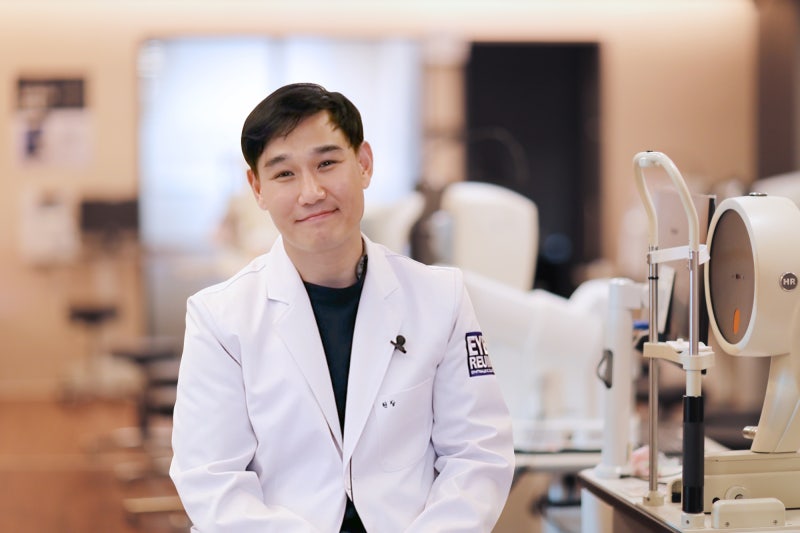
Dr. David Sung Yong Kang, Eyereum Eye Clinic
Medical Director, Eyereum Eye Clinic | M.D., Yonsei University College of Medicine & Board-Certified Ophthalmologist, Severance Hospital | Clinical Associate Professor of Ophthalmology, Yonsei University College of Medicine | Member, ISRS International Council (APAC Strategic Lead; 1 of 7 worldwide) | Fellow, World College of Refractive Surgery & Visual Sciences (FWCRS) | Author of 60+ peer-reviewed SCI/SCIE journal papers (as of 2026) | ZEISS SMILE Ambassador & International Speaker | Patent holder for surgical instruments and techniques in ICL, SMILE, LASEK, and Cataract Surgery | Two-time consecutive winner of ASCRS SMILE Session BEST PAPER (2024, 2025) | Recipient of the 2024 CSCRS (affiliated with ESCRS) SMILE Achievement Award (Sole recipient in Asia) | Named to The Power List 50 by The Ophthalmologist (2017) | Co-author of The Surgeon’s Guide to SMILE (Chapters 4 & 7)
📍 Directions to Eyereum Eye Clinic Gangnam: Directly connected toward Exit 2 of Gangnam Station
📞 Inquire about SMILE LASIK Examinations


#GangnamSMILELASIK #SMILELASIK #SMILEPro #SmartLASIK #NewSMILELASIK #SmartNOVA #PlasmaSMILE #LowEnergySMILE #QualityOfVision #HigherOrderAberrations #DrDavidSungYongKang #ESCRS2026 #CataractSurgery #LaserRefractiveSurgery #CataractAfterLASIK #EyereumEyeClinic
Frequently Asked Questions
Can I still get cataract surgery in the future after having SMILE LASIK?
Yes, cataract surgery is entirely possible. However, since refractive surgery alters the corneal contour and optical profile, it is critical to thoroughly verify prior surgical records and current corneal state before cataract surgery. Factoring these detailed diagnostic results into intraocular lens (IOL) power calculations and surgical strategies ensures optimal visual outcomes.
Does having the latest equipment guarantee better SMILE LASIK outcomes?
No, equipment alone does not dictate clinical success. While technological advancements are beneficial, surgical precision and visual quality depend heavily on how laser energy, delivery patterns, and optical zones are planned based on comprehensive diagnostics tailored to each patient's corneal shape and prescription.
Why are higher-order aberrations so important in SMILE LASIK?
Higher-order aberrations are key determinants of visual quality. Unlike regular myopia or astigmatism, they are micro-optical distortions that glasses cannot rectify. They directly cause night glare, halos, and reduced contrast sensitivity, making the analysis and management of higher-order aberration changes essential during surgical design.
What is the difference between SMILE LASIK and Smart NOVA?
The differences lie mainly in the laser delivery systems and centration tracking technologies. Both fall under the category of Keratorefractive Lenticule Extraction (KLEx), creating and removing a stromal lenticule through a tiny incision. However, because their surgical lasers and proprietary technologies vary, undergoing detailed preoperative tests is crucial to selecting the optimal approach for your eyes.