2026-10-22
Student Eye Health: From Dry Eye Care to Vision Correction After the CSAT
Eye care tips for students before the CSAT, covering dry eyes and eye strain, plus key checkpoints for SMILE LASIK, LASEK, or ICL vision correction after the exam.

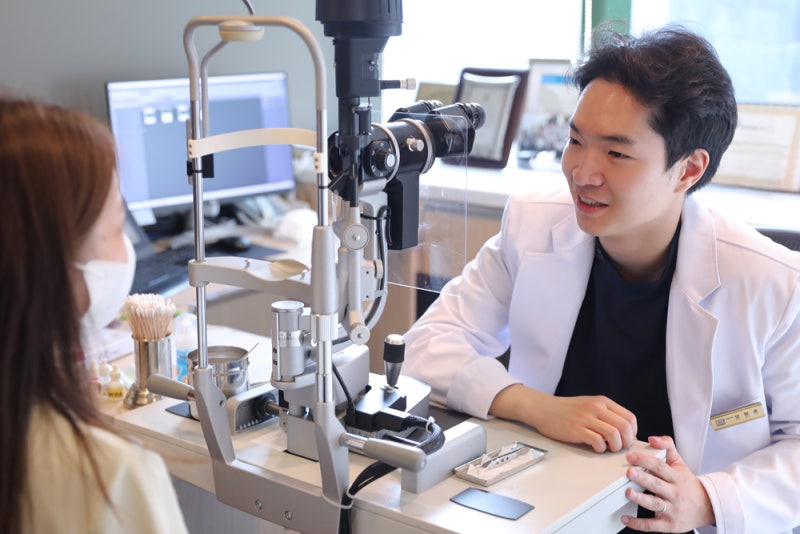
Hello, this is Eyereum Eye Clinic, an eye clinic in Gangnam.
As the CSAT approaches, many students spend most of their day looking at books, tablets, or monitors.
During this period, students often complain of dry, gritty eyes or sudden blurry vision.
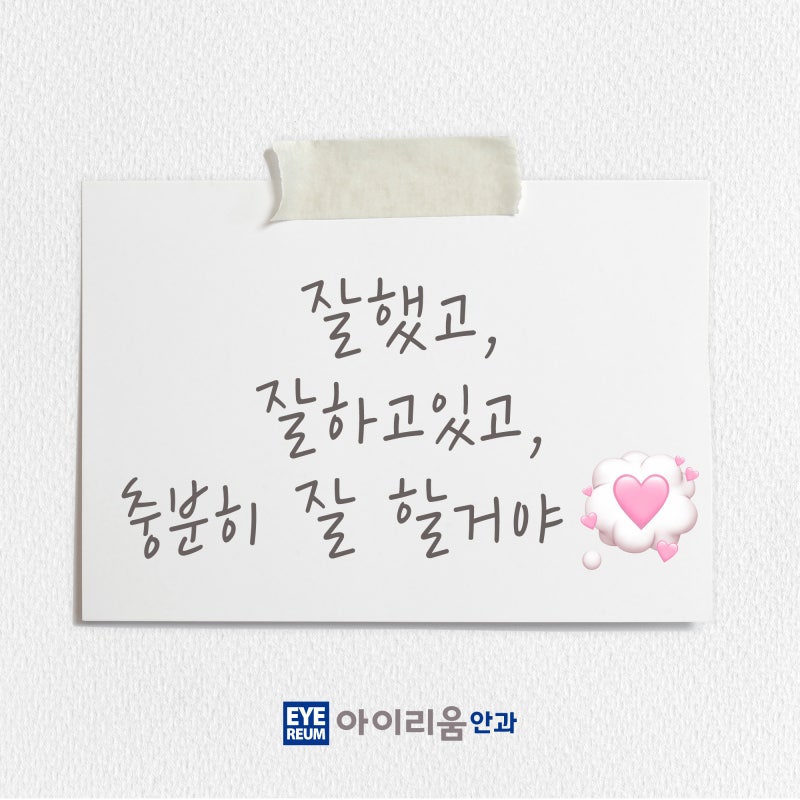
In this post, Dr. Jeong Byung-hun, director of Eyereum Eye Clinic, explains how to manage eye strain and dry eyes before the CSAT, and what to prepare for if you're planning vision correction after the exam, such as SMILE LASIK, LASEK, or ICL (Implantable Collamer Lens) implantation.
Why does my vision get cloudy while studying?
Staring at books or screens for long periods reduces how often you blink, which can make your tear film unstable. As a result, even if your actual eyesight hasn't declined, you may experience dry or uncomfortable eyes, difficulty focusing, or momentary blurriness.

When your eyes feel dry, you can try preservative-free, single-use artificial tears. If the discomfort keeps coming back or persists, it's best to have an eye doctor check the cause.
Distant objects look blurry after I've been focusing up close for a long time
If distant objects suddenly look blurry after you've focused on something nearby for a long time, it may be temporary pseudomyopia. Prolonged close-up work can keep the eye's focusing function in a state of strain, making it harder to focus on things far away.
Symptoms often improve after a short break or when you look into the distance. However, if they keep recurring, it's a good idea to get an eye exam after the CSAT to check whether your actual myopia or astigmatism prescription has changed.
Managing Eye Strain as a Student: Try These Tips!
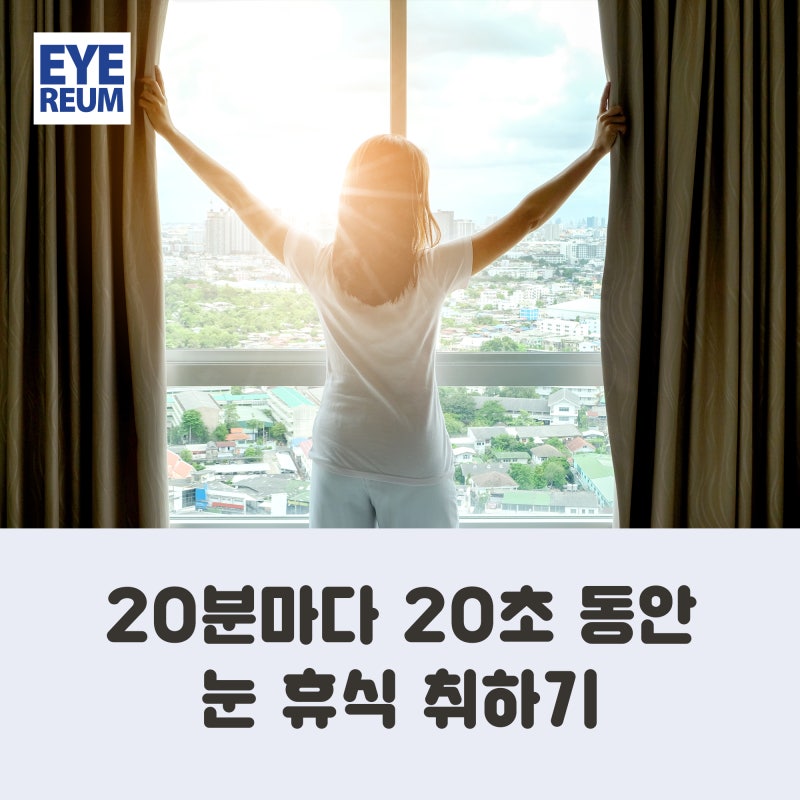
Use the 20-20-20 rule while studying
After about 20 minutes of focusing up close, look at something at least 6 m (about 20 feet) away for 20 seconds to give your eyes a break from close focus.
When watching online lectures or using a tablet, blink consciously and often, and keep air from heating or cooling systems from blowing directly into your eyes. Warm compresses and keeping your eyelids clean can also help relieve dryness. However, if dryness or redness keeps recurring and gets in the way of your studies, or if you experience sudden vision loss or severe pain, see an eye doctor, even with the CSAT approaching.
Is it okay to get SMILE LASIK or LASEK right after the CSAT?
After the CSAT, we often receive inquiries from students and their parents who are planning vision correction surgery such as SMILE LASIK or LASEK. However, the CSAT doesn't mean the entire admissions process is over. If important events such as essay exams, interviews, or practical tests are still ahead, you need to consider both the surgery date and the recovery period.
Even for procedures with quick recovery times, it's better to check your remaining admissions schedule and plan accordingly, rather than rushing into surgery right before an important event.
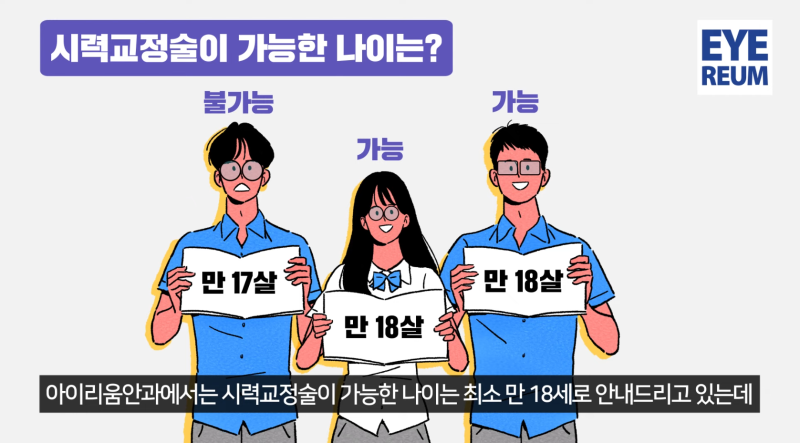
Laser vision correction is generally offered to people aged 18 and older, and the clinic also checks whether your myopia or astigmatism prescription has remained stable over the past year.
If you normally wear contact lenses, you also need to observe the lens-free period required for your lens type so that the exam results are accurate.
Pre-Surgery Detailed Exams Matter More Than the Surgery Itself
Eligibility for vision correction is not decided by corneal thickness alone. We comprehensively evaluate the shape of the front and back surfaces of the cornea, corneal stiffness, and the overall optical properties of the eye to determine whether laser vision correction is suitable. For those with extreme high myopia or astigmatism, alternatives beyond corneal reshaping procedures such as SMILE LASIK and LASEK may be considered, including ICL implantation, which places a vision-correcting lens inside the eye while preserving corneal tissue.
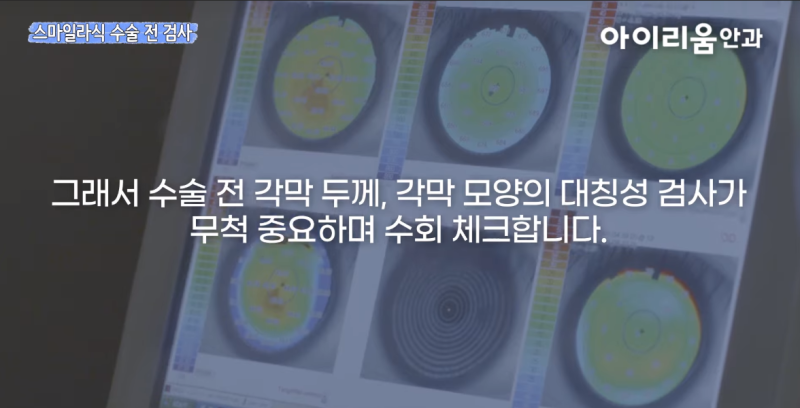
What matters most is not choosing a specific surgery first, but first confirming which vision correction options are possible given your current eye condition.
Vision Correction After the CSAT: Suitability Over Speed
If you're planning vision correction after the CSAT, it's important to check your current eye condition through a detailed exam rather than rushing to set a surgery date. Which procedure is right for you (SMILE LASIK, LASEK, or ICL implantation) should be decided based on the exam results.
To all the students: take good care of your eyes in the time you have left, and keep going until the very end!
Student LASIK Q&A
Q1. At what age can I get SMILE LASIK or LASEK?
Laser vision correction is generally considered for people aged 18 and older. However, age alone does not determine eligibility. Your myopia or astigmatism prescription should not have changed significantly over the past year, and your corneal condition will also be checked.
Q2. Is same-day vision correction possible after the CSAT?
If your detailed exam shows you're eligible for surgery and you're fully prepared, same-day procedures, where the exam and surgery are completed on the same day, can be considered for SMILE LASIK, LASEK, and ICL implantation alike. However, essay exams, interviews, or practical tests may continue after the CSAT, so it's best to set your surgery date with important events and recovery time in mind.
Q3. What should I prepare before the pre-surgery exam for vision correction?
Bring the glasses you currently wear. If you wear contact lenses, observe the lens-free period according to your exam and surgery schedule. If you're planning a same-day procedure, let us know which lenses you wear when you make your reservation.


#StudentEyeHealth #StudentEyeCare #DryEye #CSATDryEye #CSATEyeStrain #StudentEyeStrain #StudentLASIK #PostCSATVisionCorrection #VisionCorrection #VisionCorrectionExam #SmileLASIK #LASEK #ICLLens #PostCSATSmileLASIK #PostCSATLASEK #StudentVisionCorrection #GangnamEyeClinic #GangnamStationEyeClinic #EyereumEyeClinic
Frequently Asked Questions
At what age can I get SMILE LASIK or LASEK?
Laser vision correction such as SMILE LASIK or LASEK is generally considered for people aged 18 and older. However, age alone does not determine eligibility. Your myopia or astigmatism prescription should also have remained stable over the past year, and your corneal condition is checked as well.
Can I get SMILE LASIK or LASEK right after the CSAT?
Even after the CSAT, it's better to check your remaining admissions schedule before scheduling surgery. If you have essay exams, interviews, or practical tests, you need to consider the surgery date and recovery period together. Even for procedures with quick recovery, it's wise not to rush right before an important event.
Is same-day vision correction possible after the CSAT?
Yes. If your detailed exam shows you're eligible for surgery and you're prepared, a same-day procedure, where the exam and surgery are completed on the same day, can be considered. Since interviews, essay exams, or practical tests may continue, choose the date based on your important schedule and recovery time.
What should I prepare before a pre-surgery exam for vision correction?
Bring the glasses you currently wear. If you wear contact lenses, observe the lens-free period according to your exam and surgery schedule. If you're planning a same-day procedure, let us know which lenses you wear when you make your reservation.
What does the pre-surgery detailed exam check?
It comprehensively evaluates the shape of the front and back surfaces of the cornea, corneal stiffness, and the overall optical properties of the eye. Surgery eligibility is not determined by corneal thickness alone. For extreme high myopia or astigmatism, ICL implantation may also be considered.
How can I manage dry eyes while studying?
You can try preservative-free, single-use artificial tears. The 20-20-20 rule can also help: after about 20 minutes of close-up work, look at something at least 6 m away for 20 seconds. If discomfort recurs or persists, see an eye doctor.