2026-10-20
Had LASIK 20 Years Ago? First-Generation LASIK Patients Need a Different Approach to Cataract Surgery
First-generation LASIK and LASEK patients facing cataract surgery should check their corneal condition and higher-order aberrations before choosing an intraocular lens.
What First-Generation LASIK Patients Must Check When Considering Cataract Surgery
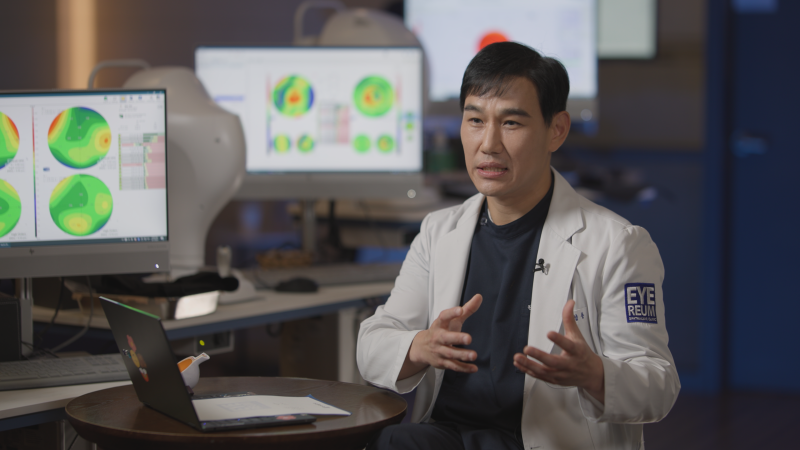
Hello, this is Gangnam Eyereum Eye Clinic.
Those who gave up their glasses through LASIK or LASEK in the late 1990s and 2000s, the so-called “first-generation LASIK” patients, have now entered their 50s and 60s and are beginning to consider surgery for presbyopia and cataracts.
Having lived without glasses for so long, many patients ask the following question before cataract surgery.

I want to live without glasses even after cataract surgery. I had LASIK. Can I still get a multifocal lens for my cataract surgery?
However, for eyes that have undergone LASIK or LASEK, there is something to check before choosing an intraocular lens.
That is the current condition of the cornea.
Why is cataract surgery different for eyes that had LASIK?
Having had LASIK or LASEK in the past does not mean cataract surgery is impossible.
However, because the cornea has been reshaped by laser in vision correction surgery, there are factors that differ from a typical eye and must be taken into account.
The most notable are the intraocular lens (IOL) power calculation and corneal higher-order aberrations.
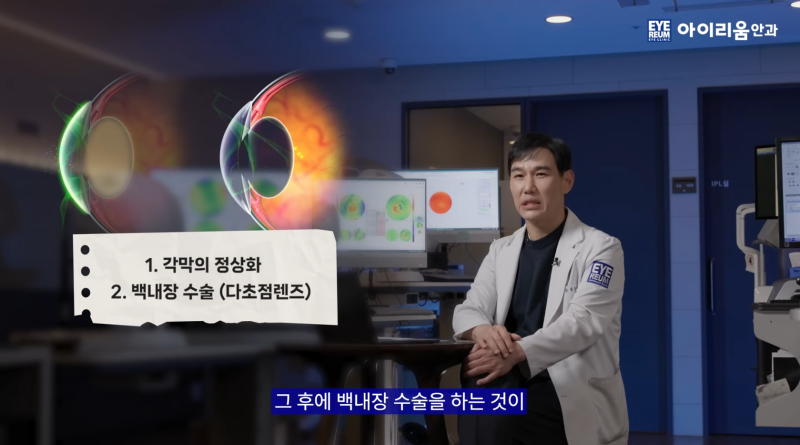
If the corneal shape altered by past laser vision correction is not fully taken into account, the lens power in post-LASIK cataract surgery may differ from what was expected.
The other concern is visual quality.
In particular, if surgery was performed long ago with early-generation laser equipment, or if there was a misalignment between the treatment center and the visual axis, irregularities may remain in the cornea.

“My eyesight measures fine, but things still don’t look sharp.”
“At night, lights look like they’re spreading out.”
“Lights look smeared out long in one direction.”
If you have these symptoms, it is worth checking for corneal higher-order aberrations (HOAs) along with cataracts.
Are multifocal cataract lenses always the right choice?
Today, cataract surgery offers a range of multifocal intraocular lenses that provide vision not only at distance, but also at intermediate and near distances.
However, even a good lens does not deliver the same visual quality in every eye.
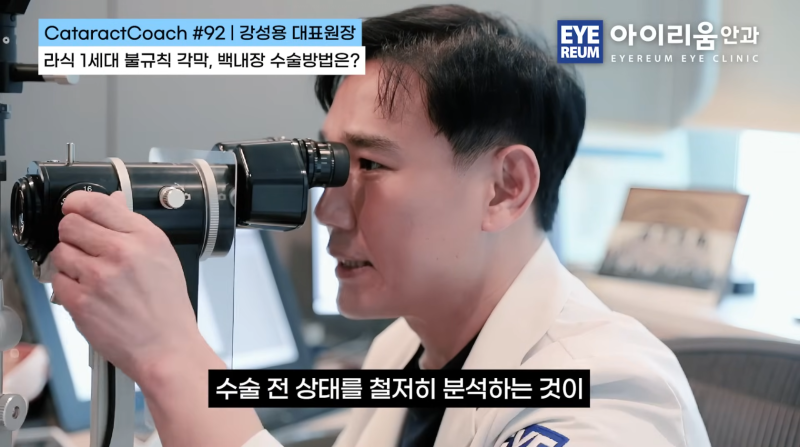
In eyes with significant corneal irregularities or higher-order aberrations, it is especially important to carefully evaluate how well the lens’s optical characteristics match the condition of the cornea.
Therefore, in cataract surgery after LASIK or LASEK, it is more important to first ask “Is this lens suitable for my cornea?” than “Which lens is the best?”
Why Eyereum Eye Clinic Looks at “Post-LASIK Cataracts” Separately
Eyereum Eye Clinic has continuously addressed cataract surgery for patients whose corneas were altered after past LASIK or LASEK as a clinical and research topic.
01. “Cornea-First Cataract Surgery” Presented at ASCRS
At the 2025 American Society of Cataract and Refractive Surgery (ASCRS) meeting, researchers presented a treatment strategy and clinical outcomes in which the irregular cornea left after earlier laser vision correction is corrected before cataract surgery is performed.

Recently, ophthalmology society journals have also covered this topic, continuing to share insights into the relationship between corneal higher-order aberrations and IOL selection in post-LASIK and post-LASEK cataract patients.
This is why we analyze not only the cataract, but also the cornea altered by past vision correction surgery.
02. Correcting the Cornea First, If Needed, Before Cataract Surgery
If a detailed examination reveals significant corneal irregularities and higher-order aberrations, a customized corneal refractive procedure using CustomEyes may be considered before cataract surgery.
The laser is designed based on an analysis of each patient’s unique corneal shape and higher-order aberrations, aiming to reduce the subtle distortions that affect glare and sharpness of vision.
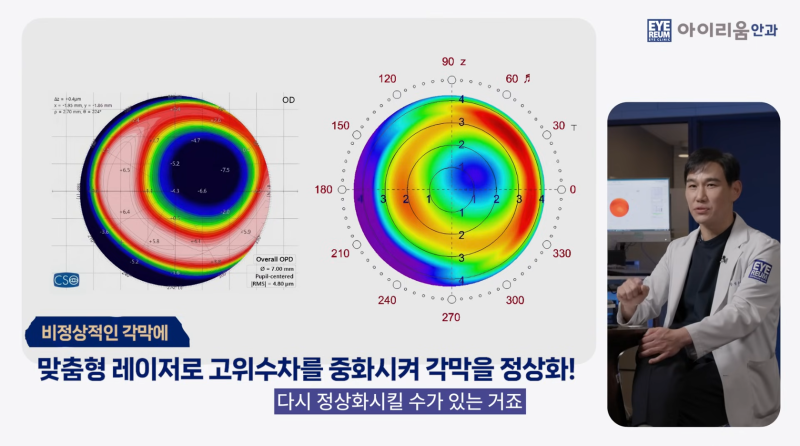
Once the cornea has sufficiently stabilized, the IOL power is recalculated and cataract surgery is planned.
Check the cornea first → correct it if necessary → select the intraocular lens based on the stabilized cornea.
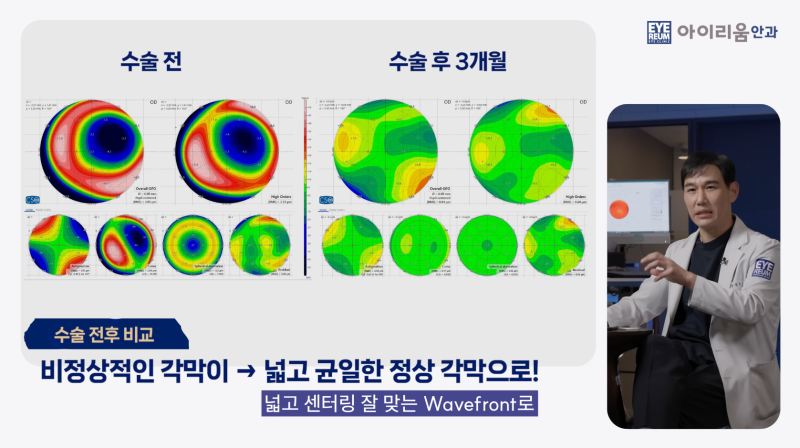
This is the process Eyereum Eye Clinic considers important in cataract surgery after LASIK or LASEK.
Of course, having had LASIK or LASEK in the past does not mean every patient needs additional corneal correction.
If the cornea is regular and there are not many higher-order aberrations, cataract surgery can proceed without separate correction.
03. “Low-Energy Cataract Surgery” Using UNITY® CS
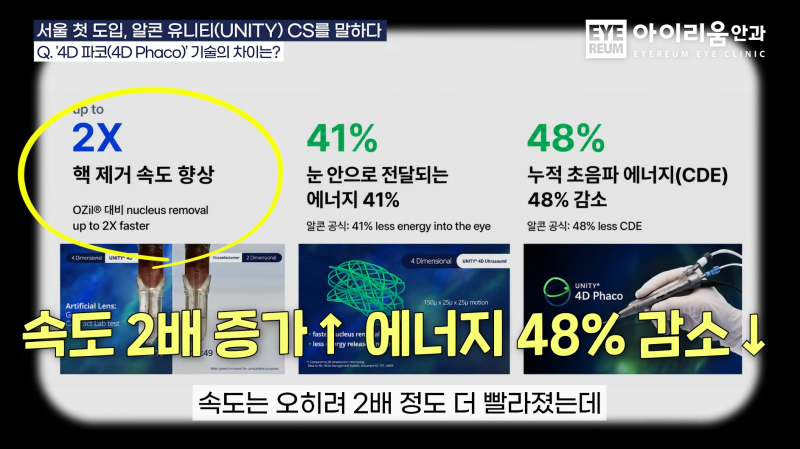
Eyereum Eye Clinic performs low-energy cataract surgery using UNITY® CS.

In cataract surgery, the clouded lens must be broken into small fragments with ultrasonic energy and then removed.
UNITY CS’s 4D Phaco aims to remove the lens nucleus more efficiently, thereby reducing the ultrasonic energy delivered to the eye during surgery. Intelligent Fluidics is designed to maintain an intraocular pressure during surgery that closely approximates the eye’s natural physiological state.
This is why Eyereum Eye Clinic not only carefully analyzes the cornea and higher-order aberrations in post-LASIK and post-LASEK cataract patients, but also considers the energy delivered to the eye and the ocular environment during the actual cataract procedure.
Gangnam Eyereum Eye Clinic also offers cataract surgery.
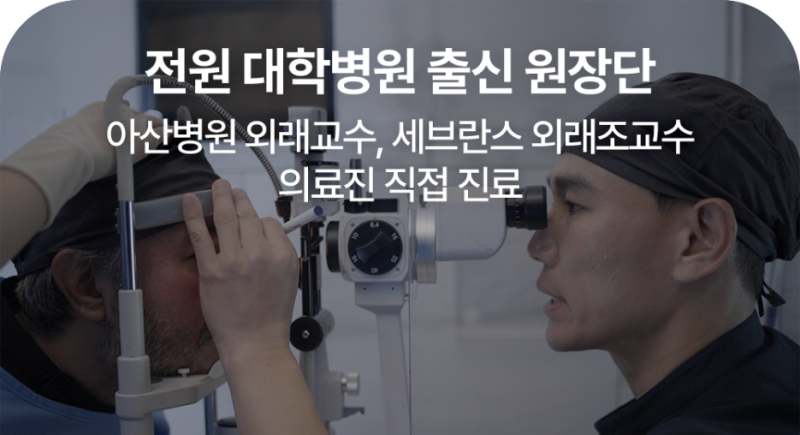
✔ Direct Care by Ophthalmologists With University Hospital Backgrounds
Ophthalmologists with extensive clinical experience, including an outpatient professor at Asan Medical Center and an outpatient associate professor at Severance Hospital, personally provide consultations and surgeries.
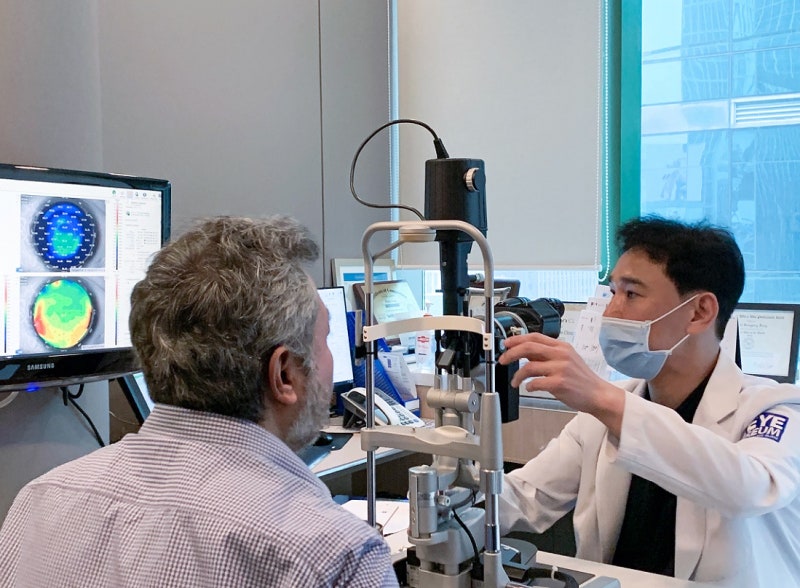
✔ Comprehensive Examinations Before Cataract Surgery
We examine everything from the cornea to the lens and retina in detail to determine the intraocular lens and surgical method that suit your eyes.
✔ Convenient Access From Gangnam Station
The clinic is directly connected from the direction of Gangnam Station Exit 2, so you can conveniently visit for examinations, surgery, and regular post-surgery checkups without going outside.

From Vision Correction That Began With LASIK and LASEK to Presbyopia and Cataract Surgery
Gangnam Eyereum Eye Clinic will be with you through the vision changes that come with time.
#PostLASIKCataract #CataractSurgery #GangnamCataractSurgery #PresbyopiaCataract #MultifocalIOL #MultifocalCataractLens #HigherOrderAberrations #CustomEyes #LowEnergyCataractSurgery #UNITYCS #UnityCataract #GangnamEyeClinic #GangnamEyereum #Eyereum




Frequently Asked Questions
Can I have cataract surgery after LASIK?
Yes. Having had LASIK or LASEK in the past does not mean cataract surgery is impossible. However, because the shape of the cornea has changed through vision correction, there are factors that differ from a typical eye and need to be considered.
What should be checked first before cataract surgery after LASIK?
In cataract surgery after LASIK, it is important to check the current condition of the cornea before choosing an intraocular lens. If the corneal shape altered by laser vision correction is not fully taken into account, the lens power may differ from what was expected.
Are multifocal cataract lenses always good for eyes that had LASIK?
No. Even a good lens does not deliver the same visual quality in every eye. In eyes with corneal irregularities or higher-order aberrations, it is important to carefully check whether the lens’s optical characteristics match the condition of the cornea.
What symptoms suggest that corneal higher-order aberrations should be checked?
If your vision measures fine but isn’t sharp, or if lights spread out at night, corneal higher-order aberrations should be checked along with cataracts. Lights that appear smeared out in one direction are also mentioned as one of these symptoms.
Is corneal correction necessary before cataract surgery?
No. Not every patient needs additional corneal correction. If the cornea is regular and there are not many higher-order aberrations, cataract surgery can proceed without separate correction. If a detailed examination reveals significant irregularities and higher-order aberrations, a customized corneal refractive procedure may be considered.