2026-11-06
Dr. Byung-hoon Jung of Eyereum Eye Clinic Presents Latest SmartNova Clinical Results at KSCRS
At the 2026 KSCRS Annual Symposium, Dr. Byung-hoon Jung presented SmartNova clinical data showing more accurate centration, with visual outcomes and safety similar to SmartLASIK.
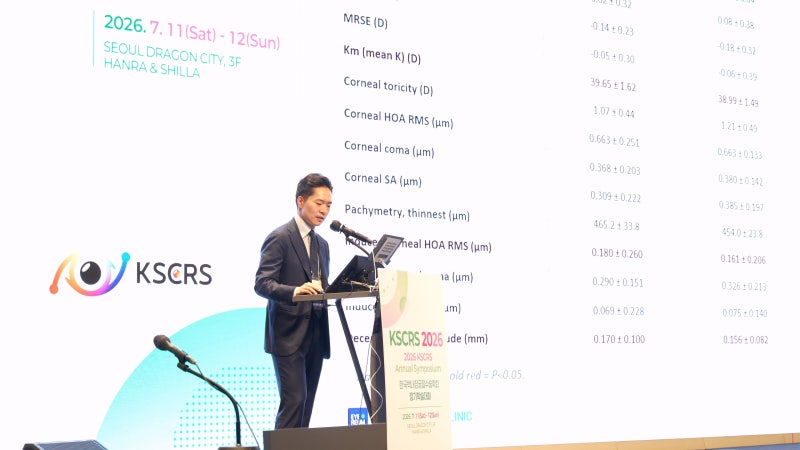
Vision correction surgery is evolving beyond simply sharpening eyesight. Today, how precisely the procedure is performed and the quality of vision after surgery (Quality of Vision) are considered just as important.
Against this backdrop, Chief Director Byung-hoon Jung of Eyereum Eye Clinic presented the latest clinical research on SmartNova at the "2026 Korean Society of Cataract and Refractive Surgery (KSCRS) Annual Symposium," held at Seoul Dragon City on July 11–12.
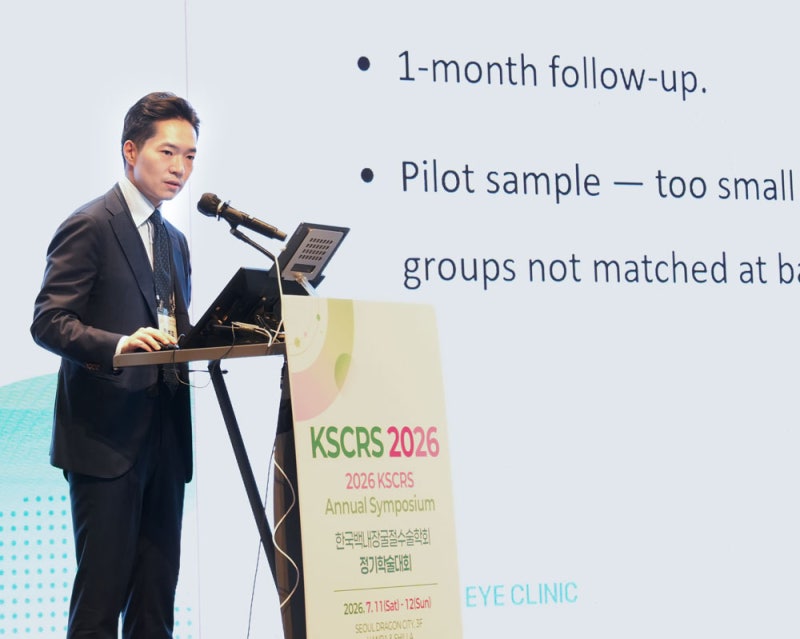
This presentation covered the clinical results of SmartNova, which applies automatic decentration and cyclotorsion compensation technology (CenTrax), along with research on centration accuracy, which is considered critical in vision correction surgery.
What research was presented at this conference?
Chief Director Byung-hoon Jung presented on "Clinical Results of Corneal Refractive Lenticule Extraction with Automatic Decentration and Cyclotorsion Compensation."
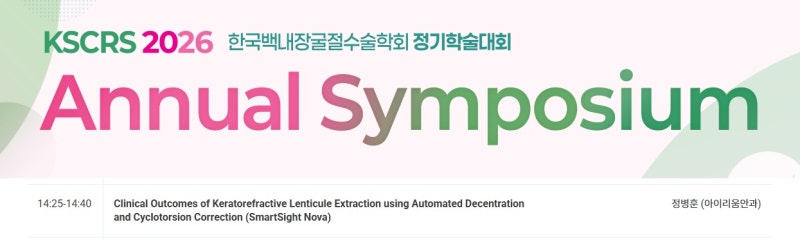
In this study, SmartNova and the existing SmartLASIK were compared across the following aspects:
• Postoperative visual acuity
• Predictability of refractive correction
• Safety
• Corneal optical properties
• Accuracy of surgical centration
Other factors were also comprehensively analyzed.
The study found that SmartNova formed the lenticule more accurately at the planned position than the existing SmartLASIK.
On the other hand, postoperative visual recovery, safety, and predictability of refractive correction remained at a level similar to the existing SmartLASIK.
In short, the key finding of this study is that SmartNova improved the accuracy of surgical centration while maintaining the stability of the existing procedure.
What makes SmartNova different?
SmartNova is a vision correction procedure based on corneal refractive lenticule extraction, similar to SMILE.
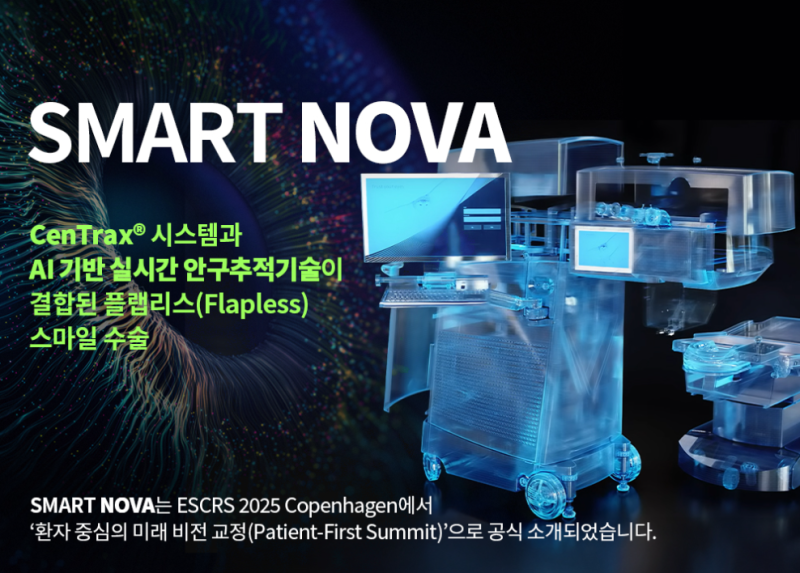
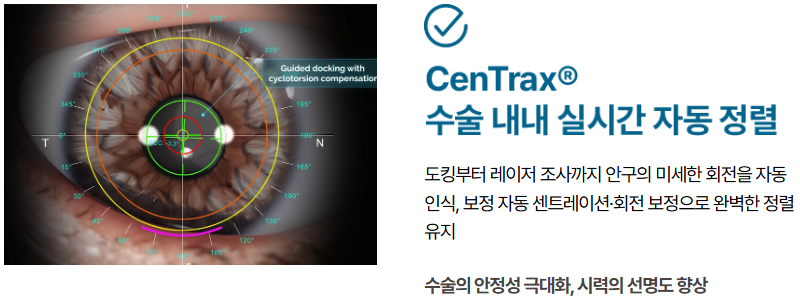
It also incorporates automatic centration correction (CenTrax) technology, which automatically compensates for decentration and cyclotorsion that may occur during the surgical process.
The position of the pupil and the center of the cornea vary slightly from person to person, and the eye may rotate subtly when lying down.
SmartNova corrects these changes in real time, helping the laser be delivered more accurately to the planned position.
Why is "surgical centration" important?
Gangnam Eyereum Eye Clinic has long emphasized that, in all vision correction procedures, including SMILE, LASIK, and LASEK, precise surgery aligned to the corneal vertex, the center of vision, is essential.
This is because it is also related to higher-order aberrations (HOAs).
Higher-order aberrations refer to subtle visual distortions that cannot be corrected with eyeglasses or contact lens prescriptions alone, unlike myopia or astigmatism.
As higher-order aberrations increase, vision may test well but can be accompanied by nighttime halos, glare, reduced sharpness, and lower contrast sensitivity, which can diminish the quality of vision.
For this reason, how accurately surgical centration is aligned is increasingly considered an important evaluation factor in recent vision correction surgery.
Chief Director Byung-hoon Jung
"Vision correction surgery is no longer enough just to see clearly."
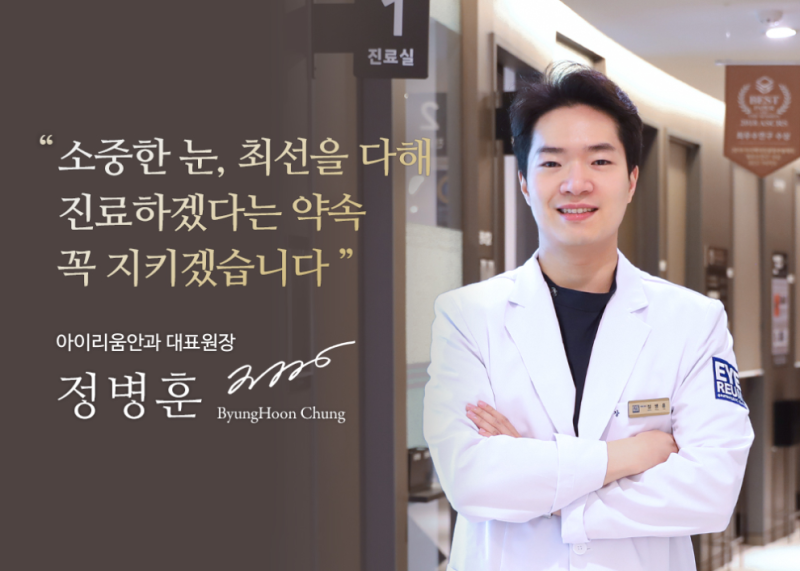
Chief Director Byung-hoon Jung explained, "Because the position of the pupil and the shape of the cornea differ for each person, it is important to set the appropriate surgical method and centration for each individual based on a precise examination."
When it comes to vision correction surgery, it is important to choose the procedure that is right for your eyes.
SmartNova, SMILE, LASIK, LASEK, and other vision correction procedures each have distinct features and different candidacy criteria.
Recently, advances in surgical equipment have been accompanied by progress in precision technologies such as automatic centration correction.
However, rather than declaring one procedure better than another, the most important step is to thoroughly examine your eyes, including corneal thickness and shape, pupil size, and degree of astigmatism, and then choose the method best suited to you.
Gangnam Eyereum Eye Clinic works to select the most appropriate method for each patient's eye condition, based on surgical research and clinical data, in pursuit of safe vision correction and improved quality of vision.
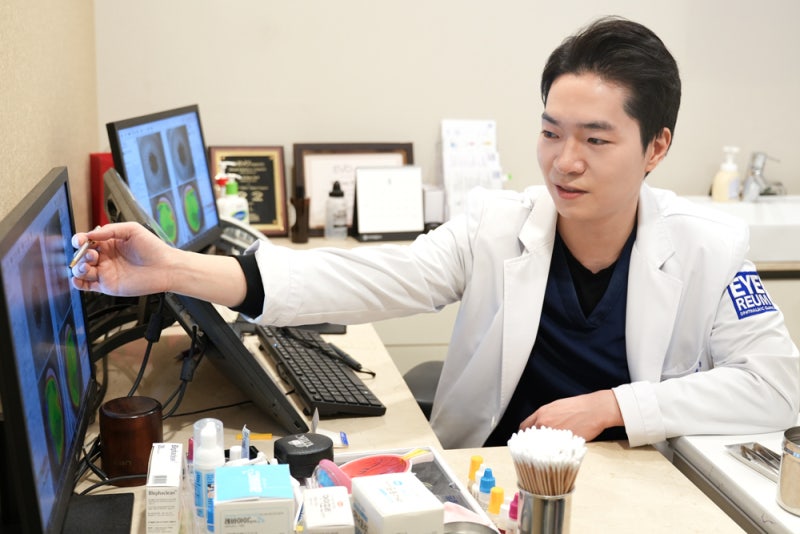
If you are planning surgery that is right for you, plan it with Gangnam Eyereum Eye Clinic.
#GangnamEyeClinic #GangnamEyereumEyeClinic #SmileLasik #KSCRS #SmartNova #VisionCorrection



Frequently Asked Questions
What kind of vision correction surgery is SmartNova?
SmartNova is a vision correction procedure based on corneal refractive lenticule extraction, similar to SMILE. It applies automatic centration correction technology to automatically compensate for decentration and cyclotorsion that may occur during surgery.
How is SmartNova different from the existing SmartLASIK?
In the study, SmartNova formed the lenticule more accurately at the planned position. Meanwhile, postoperative visual recovery, safety, and predictability of refractive correction remained at a level similar to the existing SmartLASIK.
Why is surgical centration important?
Precisely aligning the surgery to the corneal vertex, the center of vision, is related to higher-order aberrations. As higher-order aberrations increase, vision may test well while the quality of vision declines, with symptoms such as nighttime halos, glare, and reduced sharpness.
What are higher-order aberrations?
Higher-order aberrations are subtle visual distortions that cannot be corrected with eyeglasses or contact lens prescriptions alone, unlike myopia or astigmatism. According to the presentation, as they increase, nighttime halos, glare, and reduced contrast sensitivity may occur.
How should I choose a vision correction procedure?
It is important to thoroughly assess your eye condition through a detailed examination and then choose the procedure that suits you. Factors such as corneal thickness and shape, pupil size, and degree of astigmatism should be considered, and each procedure, including SMILE, LASIK, and LASEK, has distinct features and candidacy criteria.