2026-10-30
Does LASEK Hurt? Pain and Recovery Period
Covers LASEK pain, the recovery timeline, who LASEK suits, and how Eyereum Eye Clinic's CustomEyes Today LASEK plans surgery after detailed corneal testing.
LASEK has long been one of the most widely used vision correction procedures, yet many people still hesitate because of the pain and the long recovery period. In particular, as procedures like SMILE, which promise a relatively quick recovery, have become well known, LASEK is often perceived as a surgery with a slower recovery.
However, LASEK has also evolved. Advances in surgical methods and postoperative care now focus on reducing discomfort after surgery and supporting faster recovery compared with the past. In this article, we will cover LASEK pain and recovery time, the types of eyes for which LASEK is considered, and the examinations and planning steps involved in CustomEyes Today LASEK at Eyereum Eye Clinic.
Does LASEK hurt?
During LASEK, the outermost layer of the cornea, the epithelium, is removed and the cornea is then reshaped with a laser. After surgery, the removed epithelium needs to regenerate, and during this period you may experience a foreign body sensation, watery eyes, glare, or pain. Experiences vary from person to person, but discomfort is generally more noticeable during the first few days as the epithelium heals, rather than immediately after surgery.

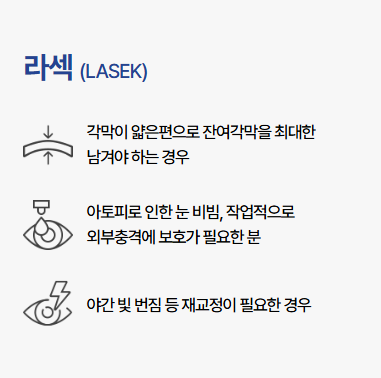
That is why, with LASEK, it matters not only how the procedure itself is performed, but also how stably the epithelium heals and how postoperative pain and discomfort are managed.
How long is the LASEK recovery period?
After LASEK, the corneal epithelium needs time to regenerate, so in the early stages your vision may be blurry and your eyes may feel achy and uncomfortable. As the epithelium recovers, your vision gradually stabilizes.
In recent years, LASEK surgery and postoperative care have also been evolving to ease this burden in the early recovery period.
How is Today LASEK different from standard LASEK?
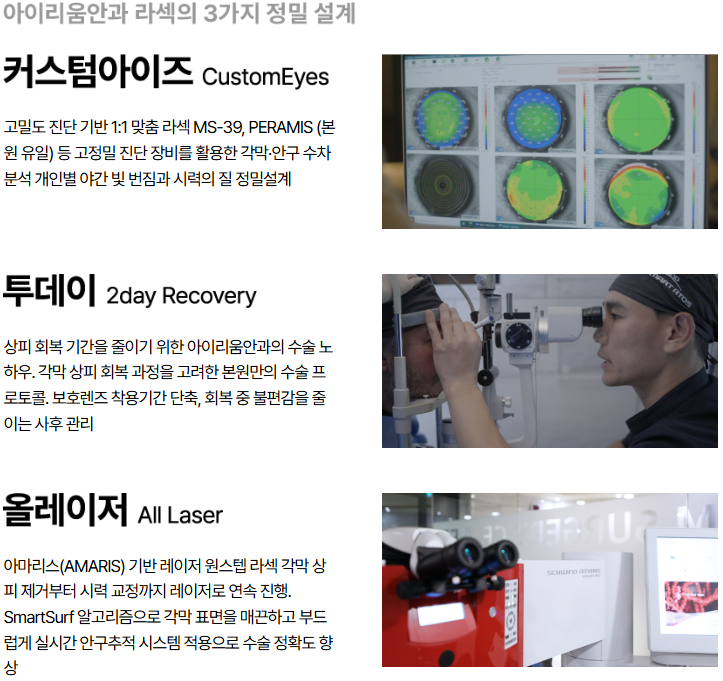
Today LASEK, performed at Eyereum Eye Clinic, is a surgical and recovery protocol designed with the epithelial healing process and early discomfort in mind.
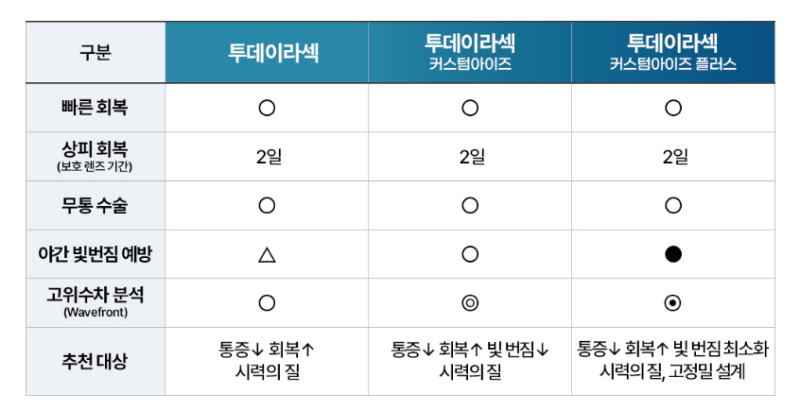
While keeping the basic surgical principles of LASEK, its key features are a detailed analysis of the cornea's condition, along with personalized surgical planning and recovery management. With approaches that ease the recovery burden, such as Today LASEK, now in use, LASEK can be chosen as a vision correction method that preserves the cornea and lowers the risk associated with external impact.
Today LASEK Recovery Period at a Glance
- From the day after surgery: face washing, basic skincare, light exercise
- After 3 days: eye makeup
- After 1 week: swimming, saunas, strenuous exercise, alcohol, etc.
※ The pace of recovery and the point at which vision stabilizes can vary depending on each person's eye condition.
Why choose LASEK when SMILE is available?
Procedures with fast recovery, such as SMILE and SMILE Pro, are well known, but depending on eye condition and lifestyle, LASEK may be the better fit in some cases.
LASEK reshapes the corneal surface without creating a corneal flap, which may help preserve corneal tissue and carries less risk from external impact. For that reason, LASEK may be considered by people who regularly take part in sports that can impact the area around the eyes, such as martial arts or boxing, or by those whose jobs carry a high risk of eye trauma. Also, if you have a habit of frequently rubbing your eyes due to allergies or atopic conditions, it is best to check not only your corneal condition but also your eye-rubbing habits before deciding on the surgical method.
Ultimately, LASEK is not simply a ‘slow-recovery surgery.’ It is one of the vision correction methods with clear advantages when corneal condition and lifestyle are taken into account.
Why is detailed testing important even for the same LASEK procedure?
Before LASEK, it is important to check not only the myopia and astigmatism power but also the shape and thickness of the cornea and the optical characteristics of the entire eye.
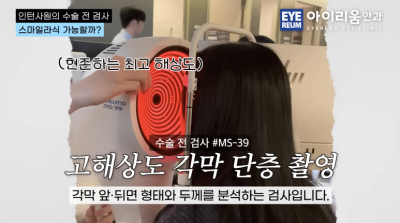
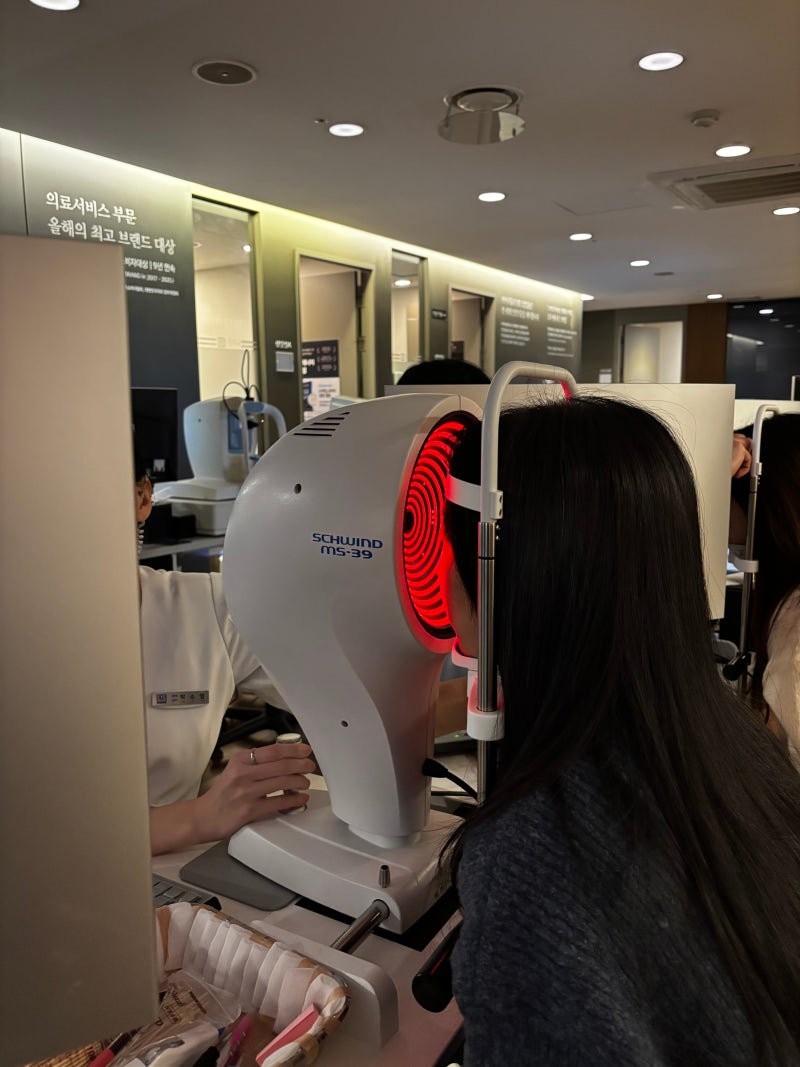
At Eyereum Eye Clinic, MS-39 is used to precisely examine corneal structure, including the anterior and posterior surfaces, thickness, and epithelial layer, while PERAMIS analyzes not only the aberrations generated by the cornea but also the optical characteristics of the entire eye.
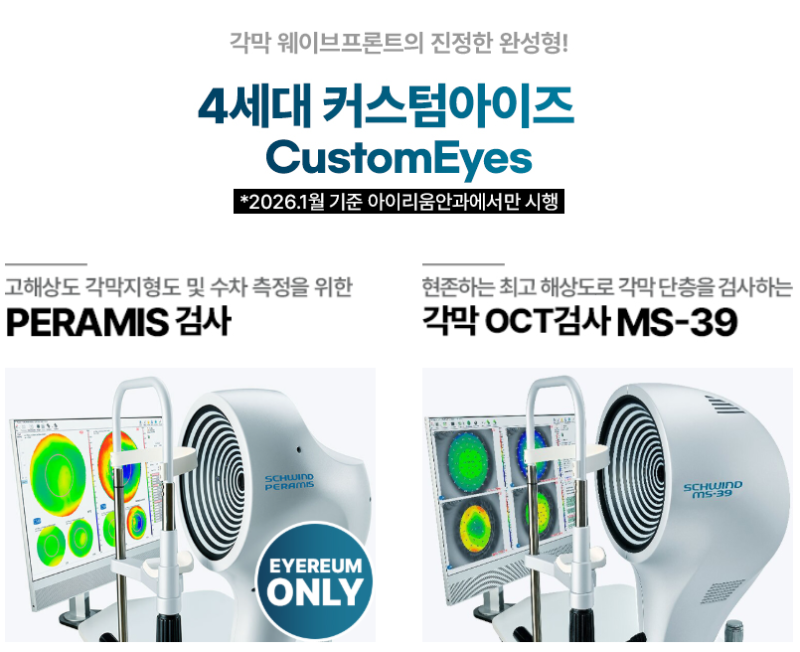
To put it simply:
Corneal Wavefront
→ Light distortion arising from the cornea
Total Ocular Wavefront
→ Light distortion arising from the entire eye, including the cornea
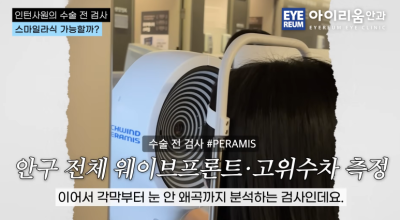
Even with the same myopia or astigmatism power, these optical characteristics can differ from person to person.
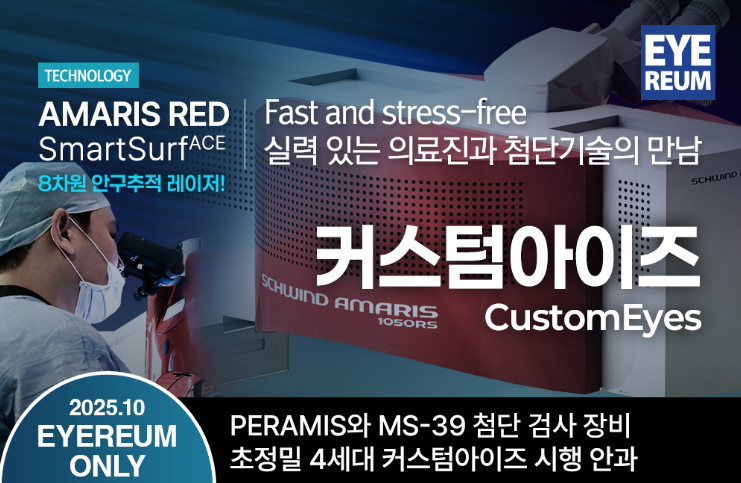
CustomEyes LASEK at Eyereum Eye Clinic applies these detailed examination results to the surgical equipment, delivering a 1:1 customized surgical plan tailored to each person's corneal condition and optical characteristics. CustomEyes can be used not only for patients undergoing LASEK for the first time, but also for those whose cornea has become irregular after previous LASIK or LASEK, helping reshape it into a more regular form. It can also be applied when corneal treatment is needed to improve visual quality, such as a precise evaluation of the corneal condition before cataract surgery.
LASEK is a vision correction procedure decided by considering corneal condition, lifestyle, and recovery schedule. Rather than settling on a surgical method in advance, it is especially important to go through detailed testing to confirm which option suits your eyes.
At Eyereum Eye Clinic, we review your corneal condition and the optical characteristics of your eyes based on detailed testing such as MS-39 and PERAMIS, and consult on a personalized surgical plan. If you are considering LASEK or Today LASEK, start by confirming which vision correction method suits your eyes through detailed testing.
Underground connection toward Gangnam Station Exit 2
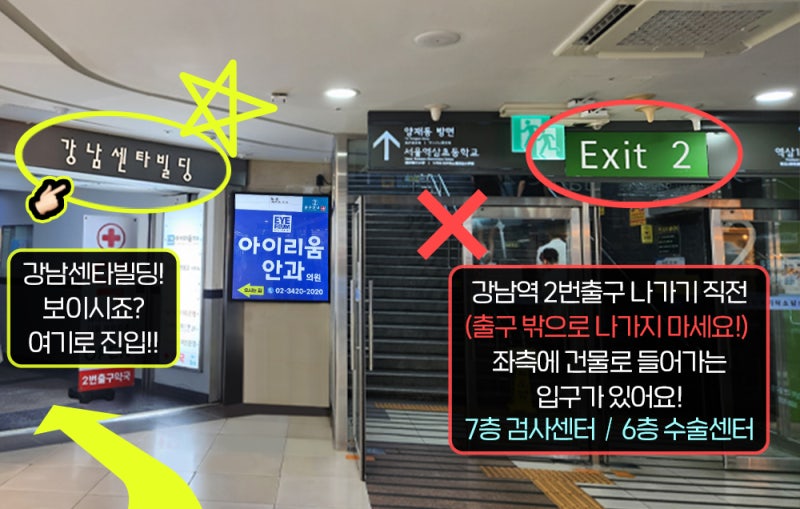
▶ Eyereum Eye Clinic CustomEyes Today LASEK Consultation Information

#LASEKRecoveryPeriod #LASEKPain #TodayLASEK #CustomEyesLASEK #EyereumLASEK #LASEK #SMILE #VisionCorrection #GangnamEyeClinic #EyereumGangnam
Frequently Asked Questions
Does it still hurt after LASEK surgery?
Yes, pain can occur while the epithelium heals after surgery. A foreign body sensation, watery eyes, and glare may also appear. Experiences vary from person to person, but discomfort is generally more noticeable during the first few days of recovery than right after surgery.
How long is the LASEK recovery period?
Recovery speed varies with each person's eye condition, so it is hard to give a single answer. The corneal epithelium needs time to regenerate after surgery, and in the early stages your vision may be blurry and your eyes may feel achy and uncomfortable. As the epithelium recovers, your vision gradually stabilizes.
What is the Today LASEK recovery schedule?
The schedule is staged: from the day after surgery, you can resume face washing, basic skincare, and light exercise; after 3 days, eye makeup; and after 1 week, swimming, saunas, strenuous exercise, and alcohol. However, the pace of recovery and when vision stabilizes may vary depending on each person's eye condition.
Why consider LASEK instead of SMILE?
Depending on eye condition and living environment, LASEK may be a better fit in some cases. Because LASEK does not create a corneal flap, it may help preserve corneal tissue. It also carries less risk from external impact, so it may be considered by people who frequently play sports that can impact the eye area, or by those whose jobs carry a high risk of trauma.
Why is detailed testing important before LASEK?
It is to check not only myopia and astigmatism power before surgery, but also the shape and thickness of the cornea and the optical characteristics of the entire eye. Even with the same myopia or astigmatism power, optical characteristics can differ from person to person, so it is best to decide on the surgical method that suits you based on the test results.
How is Today LASEK different from standard LASEK?
Today LASEK, performed at Eyereum Eye Clinic, is a surgical and recovery protocol that keeps the basic surgical principles of LASEK while accounting for the epithelial healing process and early discomfort. Its distinguishing feature is a precise analysis of corneal condition, along with personalized surgical planning and recovery management.