2026-11-13
Can You Get Student LASIK Right After the CSAT? Checking Smile LASIK Age Requirements and Recovery Time
Can you get student LASIK right after the CSAT? This guide covers Smile LASIK age requirements, recovery time, and what to check before your exam.

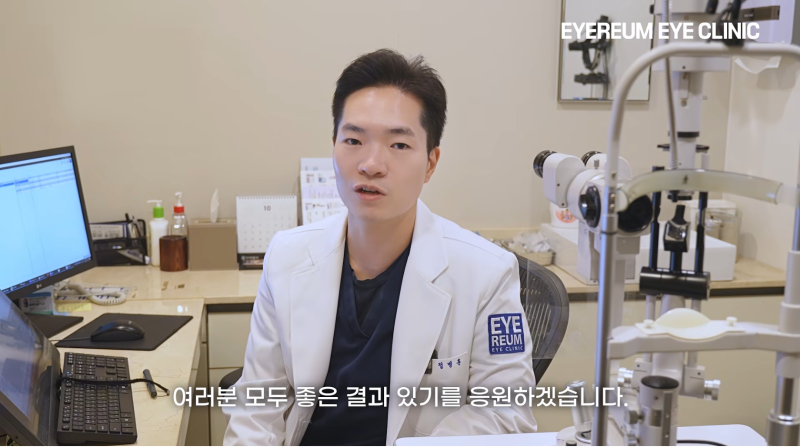
The CSAT you have been preparing for over a long time is now just around the corner.
We wish all of you who are giving your best until the very end the very best results!
Once the CSAT is over, many students start looking into vision correction surgery they had put off. Many want to reduce the hassle of glasses or contact lenses before starting university, or plan surgery during the winter break, when their schedules are relatively open.

Can you get student LASIK right after the CSAT?
What is the minimum age for Smile LASIK, and how long is the Smile LASIK recovery period?
Rather than deciding on a procedure first, let’s look at the criteria you need to check first.
Smile LASIK Age: Can You Get It Right After the CSAT?
Vision correction surgery is not something you can get simply because the CSAT is over.
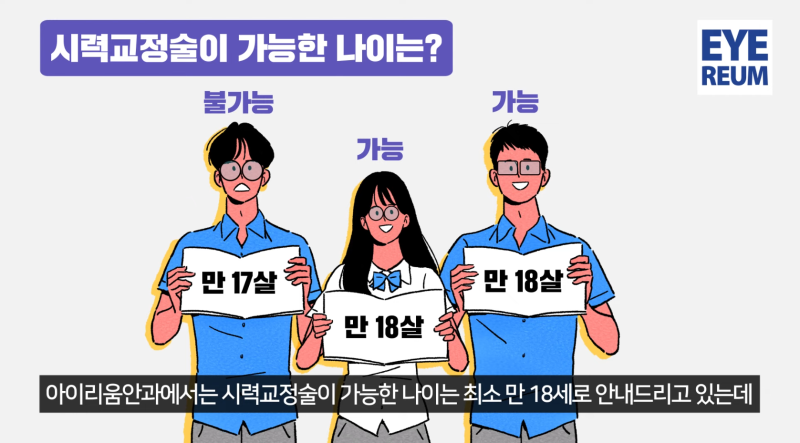
For all vision correction procedures, including Smile LASIK, LASEK, LASIK, and lens implantation, you must be at least 18 years old, your myopia and astigmatism prescription must have remained largely stable over the past six months, and a thorough examination must confirm that your eyes are suitable for surgery before candidacy is decided. Since myopia can still be progressing in the late teens, we also check whether your glasses prescription has changed recently, not just your current vision. When patients inquire about student LASIK or student Smile LASIK, Eyereum Eye Clinic asks them to be sure to bring the glasses and contact lenses they are wearing to the examination.
If you are planning student LASIK or exam-student LASIK, it is more important to confirm that your vision has been stable recently than to focus only on “what age is the minimum.”
Why Are So Many Students Looking Into Smile LASIK?
One of the things exam-takers consider most important when looking into vision correction surgery is the recovery period.

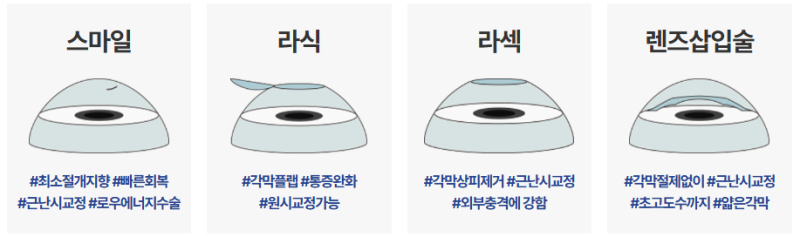
Smile LASIK corrects vision without making a large incision in the cornea. Through a small incision, the surgeon removes a lenticule from inside the cornea. Because it allows for a relatively quick return to daily life, it is a procedure many students with plans during winter break, such as academy classes, travel, or preparing for university, look into.
That said, choosing a procedure just because Smile LASIK offers faster recovery is not appropriate. Depending on your eye conditions, such as corneal thickness and shape, the degree of myopia and astigmatism, and dry eye status, LASEK or ICL lens implantation may be a better fit.
For Student LASIK, Vision Quality Matters as Much as Recovery Speed
For your first vision correction surgery in your late teens or early twenties, it is important to consider not only whether you reach “1.0” on the eye chart, but also post-surgery vision quality, such as nighttime light halos, glare, and sharpness.
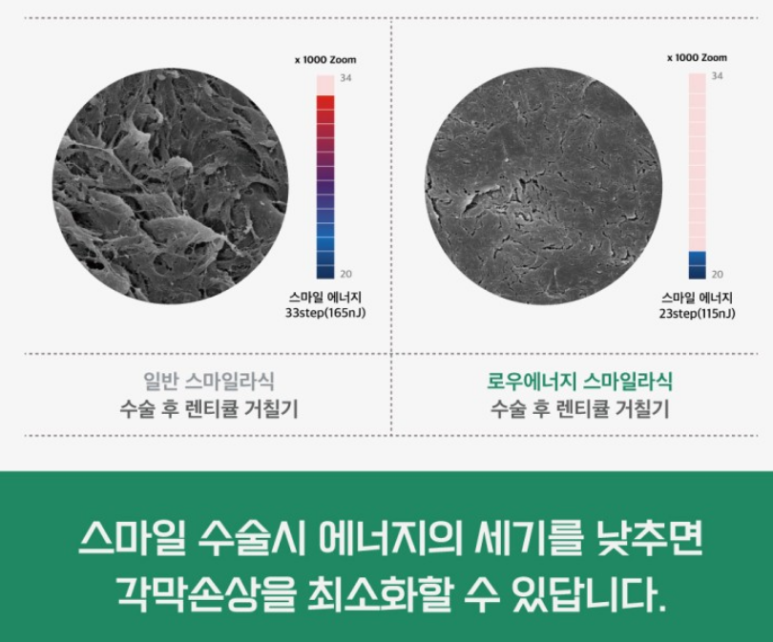
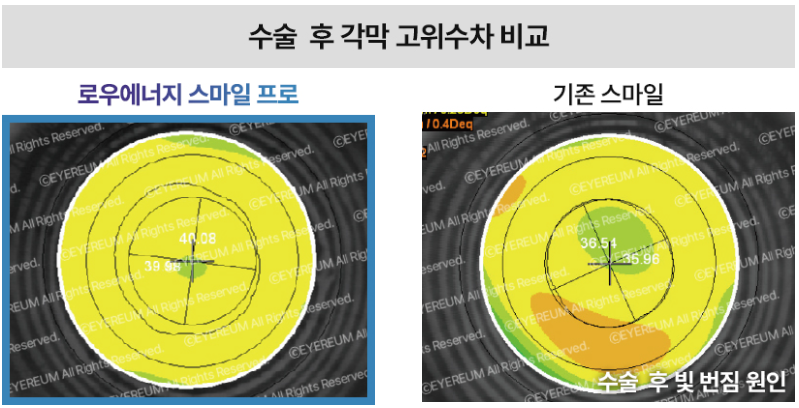
Recently, Smile-based vision correction procedures have also been advancing in ways that improve this vision quality. Eyereum Eye Clinic continues to research post-surgery optical changes, including Low-Energy SMILE, which lowers laser energy to create a smoother corneal cut surface; SmilePro, which uses the VISUMAX 800; and Plasma SMILE, which finely adjusts laser energy and spot arrangement.
So when choosing student LASIK or exam-student LASIK, it is important to check not only whether the procedure offers quick recovery, but also which surgical method and treatment design suit your eyes.
What If Smile LASIK Isn’t a Good Fit?
Based on the results of a thorough examination, Smile LASIK is not possible for every student.
Depending on corneal shape and thickness and the prescription to be corrected, LASEK may be considered. For high myopia or astigmatism that is difficult to correct with a laser, ICL lens implantation, which does not involve cutting the cornea, can be an alternative. LASEK generally requires a longer recovery period than Smile LASIK, but it may be more suitable depending on your corneal condition and lifestyle. ICL is also decided only after carefully checking multiple conditions, including not just corneal thickness but also the space inside the eye and lens size.
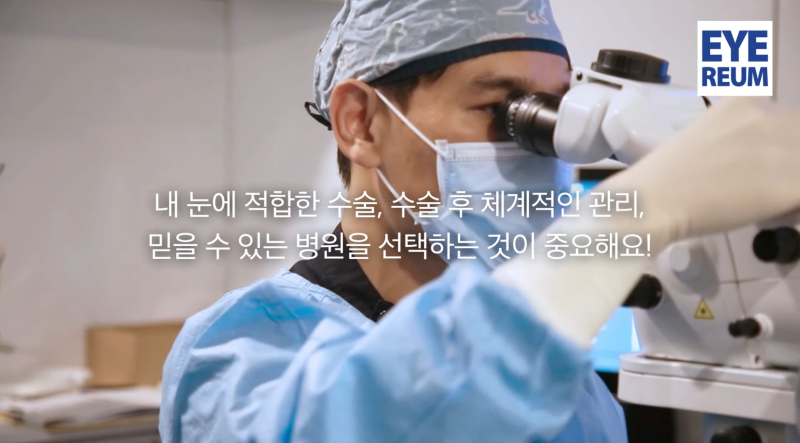
So rather than asking “Which surgery is best for students?”, it is more important to first ask “Which surgery is right for my eyes?”
What to Prepare Before the Student LASIK Examination
If you are planning your examination and surgery on your preferred schedule during the winter break, you will also need to prepare for the examination in advance.
Contact lenses can affect the shape of the cornea, so you must stop wearing them for a set period to ensure an accurate examination. Eyereum Eye Clinic recommends not wearing soft lenses for at least 3 days, hard lenses for at least 5 days, or Dream lenses for at least 30 days before your examination date.
If your winter break is short and you are considering one-day Smile LASIK, which combines the examination and surgery into a single day, it is especially important to observe the lens-free period in advance and keep your eyes in good condition.

If the corneal condition, dry eye, or inflammation requires further evaluation on the day of the examination, treatment may come first, or the surgery schedule may be adjusted rather than proceeding right away. So if you are planning one-day Smile LASIK or one-day vision correction surgery on a specific date, it is a good idea to review the pre-examination requirements ahead of time.
For Your First Vision Correction, Put the Examination Results Before the Procedure Name
If you are considering vision correction surgery for the first time as a student or exam-taker, the first step is to find out which method suits your eyes, rather than which procedure is best known. Instead of choosing based on fast recovery or a particular procedure name, it is important to use a thorough examination to confirm that your prescription is stable, your cornea is in good condition for surgery, and your post-surgery vision quality can be fully considered.
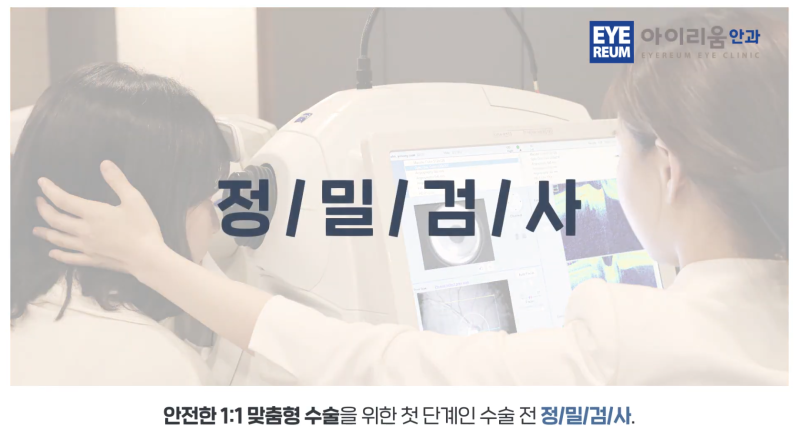
Through a thorough examination, Eyereum Eye Clinic offers consultations on vision correction options tailored to each patient’s eyes, including Smile LASIK, LASEK, and ICL lens implantation. If you are planning student LASIK, exam-student LASIK, or one-day vision correction surgery, check in advance whether the examination and surgery can fit your preferred schedule!
▶ Eyereum Eye Clinic Vision Correction Consultation & Booking
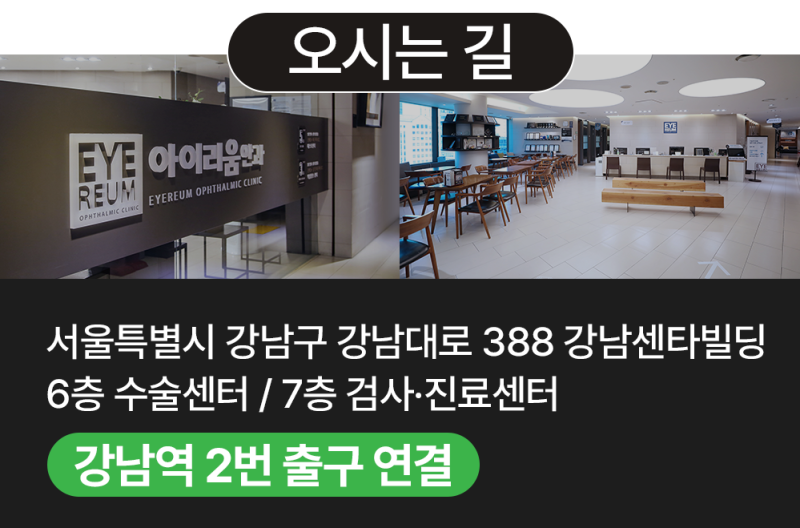
Directly Connected to Gangnam Station Exit 2, Eyereum Eye Clinic
Eyereum Eye Clinic is connected to the underground passage toward Exit 2 of Gangnam Station, making it convenient to visit by subway on Line 2 or the Sinbundang Line at Gangnam Station 😊


#ExamStudentLASIK #StudentLASIK #SmileLASIKAge #PostCSATLASIK #SmileLASIKRecovery #GangnamSmileLASIK #GangnamEyeClinic #EyereumEyeClinic
Frequently Asked Questions
Can I get Smile LASIK right after the CSAT?
Not necessarily. Vision correction surgery requires that you be at least 18 years old and that your myopia and astigmatism prescription has not changed significantly over the past six months. Whether you are eligible is decided only after a thorough examination confirms that your eyes are suitable for surgery.
What is the minimum age for Smile LASIK?
You must be at least 18 years old. Even if you meet the age requirement, eligibility is determined by the results of a thorough examination. Since myopia may still be progressing in the late teens, the clinic also checks whether your glasses prescription has changed recently.
How long is the typical Smile LASIK recovery period?
The article does not give an exact number of recovery days. Smile LASIK is described as a procedure that allows a relatively quick return to daily life. LASEK is said to generally require a longer recovery period than Smile LASIK.
Can every student get Smile LASIK?
No. Based on the results of a thorough examination, not every student is eligible. Depending on corneal shape and thickness and the prescription to be corrected, LASEK may be considered. For high myopia or astigmatism that is difficult to correct with a laser, ICL lens implantation, which does not involve cutting the cornea, may be offered as an alternative.
How many days before a vision correction examination do I need to stop wearing contact lenses?
According to the clinic’s guidelines, you should not wear soft lenses for at least 3 days, hard lenses for at least 5 days, or Dream lenses for at least 30 days before the examination date. Contact lenses can affect the shape of the cornea, so you need to stop wearing them for a set period to ensure an accurate examination.
What should I bring to a vision correction examination?
You are asked to bring the glasses and contact lenses you are currently wearing. If the corneal condition, dry eye, or inflammation needs further evaluation on the day of the examination, treatment may come first, or the surgery schedule may be adjusted.