2026-05-18
Buried Suture Double Eyelid Came Loose After 10 Years? An Incisional Revision Case
A revision case for a patient in her early 20s who underwent buried suture double eyelid surgery and epicanthoplasty, only to see the lines fade and become asymmetric 10 years later as one side came undone. With reduced skin elasticity and insufficient structural support making a simple re-burial difficult, the incisional method was used to remove unnecessary tissue and build a stable fixation structure, restoring crisp lines and left-right symmetry. Dr. Yoo Young-moon of Vibe Plastic Surgery ne
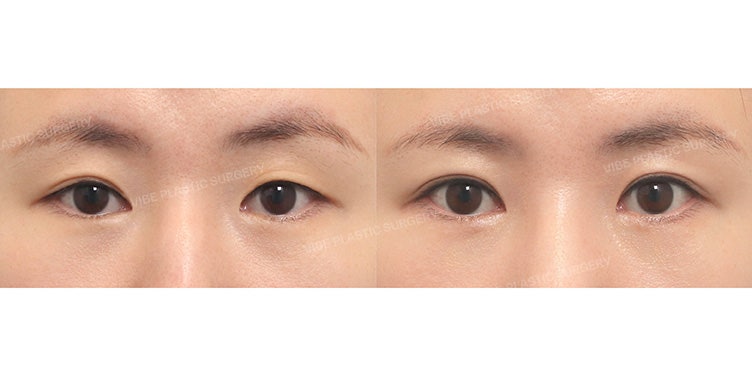
Hello.
This is Dr. Yoo Young-moon of Vibe Plastic Surgery.
Today, I'd like to share
✔️ A case where, more than 10 years after buried suture surgery + epicanthoplasty, the double eyelid line gradually faded and came undone
✔️ And how it was clearly improved through incisional double eyelid revision surgery.
✔️ "The line feels like it has disappeared"
👉 Why buried suture lines come undone
This patient had buried suture surgery and epicanthoplasty in her early 20s,
and initially maintained a natural, well-defined eye shape.
But after about 10 years,
✔️ The double eyelid line gradually thinned,
✔️ The line wouldn't form properly when opening the eyes,
✔️ Only one side came undone, creating asymmetry,
✔️ And she ended up with a tired-looking impression.
This is an extremely common case.
Because the buried suture method creates the line by tying it with thread,
👉 there is always a possibility of it coming undone over time.
Especially after the age of 30,
✔️ Eyelid skin elasticity decreases,
✔️ Fat distribution shifts,
✔️ And the strength of the eye-opening muscle (levator palpebrae) changes,
👉 making it increasingly difficult to maintain the original buried line.
✔️ Can't we just simply "re-bury" it?
Many people ask this:
"Can't we just do the buried suture again?"
Of course, it's possible.
However, in this case, I did not recommend it.
The reasons were:
✔️ There was already a history of it coming undone,
✔️ The skin was more stretched than before,
✔️ And there was insufficient structural support to hold the line again.
If we did the buried suture again in this state, 👉 I judged that there was a high probability of it coming undone once more.
So in this case, 👉 the incisional method, which creates a 'firmly fixed structure,' was more appropriate.
✔️ The core of incisional double eyelid surgery is "fixation strength"
The incisional method isn't simply surgery that cuts the skin —
👉 it is surgery that builds a structure capable of maintaining the line.
Specifically,
✔️ Unnecessary fat and stretched tissue are trimmed,
✔️ The eye-opening muscle and skin are stably connected,
✔️ And adhesions are created so the line doesn't come undone.
As a result,
👉 it's far more stable than buried sutures,
👉 and the greatest advantage is its excellent long-term durability.
Especially in revision surgery,
👉 "making sure it doesn't come undone again" is the most important thing.
✔️ Incisional method = unnatural? ❌
Many people still think this about incisional double eyelid surgery:
"Incisions are very noticeable"
"They make the eyelids thick and heavy"
"Scars will be left behind"
This is closer to a perception based on older methods.
Modern incisional double eyelid surgery
✔️ Avoids making the line excessive,
✔️ Is designed to fit each individual's eye structure,
✔️ And uses minimal incision + meticulous suturing,
👉 so it can be expressed in a thoroughly natural way.
✔️ Realistically speaking, about scar concerns
The biggest barrier for those considering incisional surgery is "scars."
But in reality,
✔️ There may be some redness initially,
✔️ It gradually fades over 2-3 months,
✔️ And after 6 months, it becomes barely noticeable.
And an important point is
👉 the scar is located inside the double eyelid line.
Therefore,
✔️ It is almost invisible when the eyes are open,
✔️ And with makeup, it becomes even less noticeable.
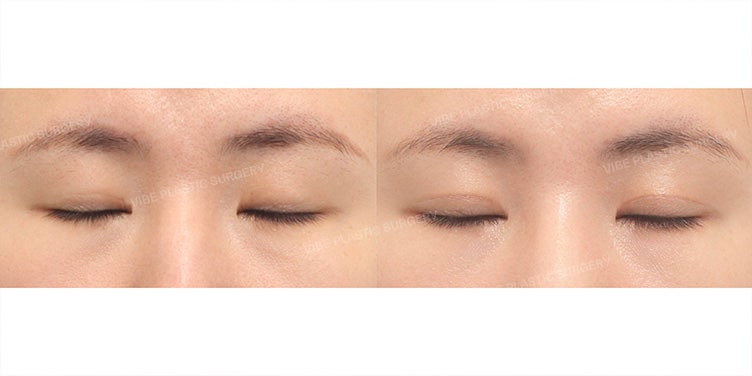
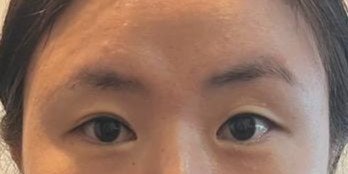
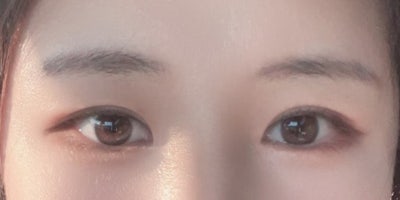
✔️ Post-surgery changes — the details matter!
For this patient, we didn't simply rebuild the line —
👉 we approached it as a way to refine the overall impression of the eyes.
Looking at the key changes,
✔️ The undone line was clearly restored,
✔️ Left-right asymmetry was improved,
✔️ A blurry eye shape → transformed into a sharp impression,
✔️ With a natural thickness that isn't excessive.
What was especially important was
👉 "making it not look incised, even though it was incised."
This is the most important point in revision surgery.
✔️ Consider incisional double eyelid surgery if you fit these criteria!
✔️ Those who have experienced their buried double eyelid coming undone
✔️ Those considering double eyelid revision surgery
✔️ Those in their 30s or older whose eyelid drooping has begun
✔️ Those who want stable results in one surgery, without repeated procedures
In these cases,
👉 rather than repeatedly burying the suture,
👉 the incisional method can offer much higher satisfaction.
✔️ Conclusion — Incision is not a "burden" but a "solution"!
Incisional double eyelid surgery is no longer the conspicuous surgery it used to be —
👉 it is closer to a surgery that definitively solves the problem.
Especially when
✔️ The buried suture has come undone,
✔️ It is a revision surgery,
✔️ Or long-term durability is important,
👉 the incisional method can actually be a more natural and reasonable choice.
Frequently Asked Questions
Why do buried suture double eyelids come undone over time?
The buried suture method creates the line by tying it with thread, so there is a possibility of it coming undone over time. Especially after the age of 30, declining eyelid skin elasticity, shifts in fat distribution, and changes in the strength of the levator palpebrae muscle make it increasingly difficult to maintain the original buried line.
Can an undone buried suture be redone with the buried suture method?
It is possible, but often not recommended. When there is already a history of it coming undone, the skin has stretched, and there is insufficient structural support to hold the line, performing the buried suture again has a high probability of it coming undone once more — so in such cases the incisional method is more appropriate.
What is the biggest advantage of incisional double eyelid surgery?
Fixation strength and long-term durability. The incisional method trims unnecessary fat and stretched tissue and stably connects the eye-opening muscle to the skin, creating adhesions so the line does not come undone — making it far more stable than the buried suture method.
How long do scars from incisional double eyelid surgery last?
They typically become barely noticeable after 6 months. There may be some redness initially, but it gradually fades over 2-3 months. Because the scar is located inside the double eyelid line, it is almost invisible when the eyes are open and even less noticeable with makeup.
Doesn't incisional double eyelid surgery look unnatural and thick?
No — modern incisional double eyelid surgery can be expressed in a thoroughly natural way. Because the line is not made excessive, it is designed to fit each individual's eye structure, and minimal incision with meticulous suturing is performed, the perception that it is a conspicuous surgery as in the past is no longer accurate.
Who is incisional double eyelid revision surgery suitable for?
It is suitable for those who have experienced their buried double eyelid coming undone or are considering revision surgery, those in their 30s or older whose eyelid drooping has begun, and those who want stable results in one surgery without repeated procedures. In such cases, the incisional method can offer higher satisfaction than repeated buried sutures.