2026-05-18
Double Eyelid Revision with Two-Line Technique for Sausage Eye Correction | Is It Possible in Your 40s?
If you're concerned about sausage eyes caused by a high double eyelid line, the two-line revision technique may be worth considering. Rather than excising tissue, this method releases the existing crease and creates a new line below it, minimizing the risk of lagophthalmos. It's suitable for patients of any age, including those in their 40s. Because re-adhesion can occur, it's essential to choose an experienced board-certified plastic surgeon.
A long time ago, when high double eyelid lines were all the rage,
many people had surgery following that trend with high creases.
When you were younger, paired with bold makeup it may have suited you well,
but at some point you may have started feeling that your eyes look like little sausages.
Especially these days, when more natural styles like inline or in-out lines are preferred,
you may find yourself constantly looking in the mirror,
dissatisfied with how your eyes currently look.
After making up your mind to undergo revision surgery and searching diligently,
have you been confused by unfamiliar clinics and unfamiliar surgical names?
You probably assumed that lowering the double eyelid line
would naturally involve incisional revision surgery,
but then the unfamiliar term "two-line technique" (Doojul-ttagi) appeared and left you puzzled.
Today, we'll explain the two-line technique, the representative surgery for correcting sausage eyes.
The two-line technique? What does that mean?
Two lines... 2 lines...
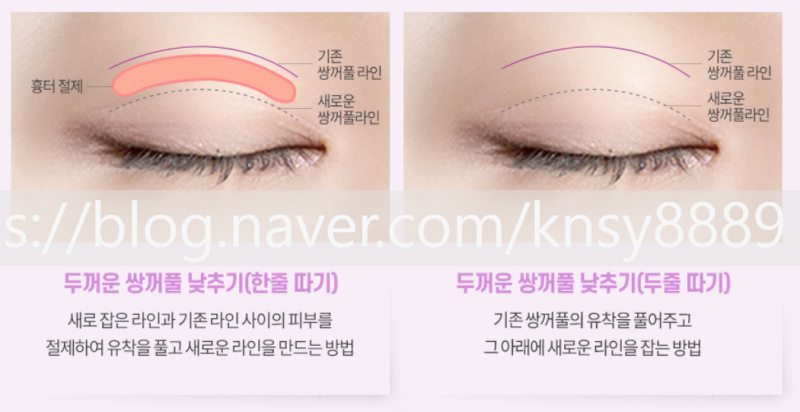
That's right. The two-line technique is so named because
the surgery involves making two incision lines.
Typically, incisional revision surgery is often accompanied by excision of tissue,
but for patients who don't have enough skin to spare,
this can cause lagophthalmos (inability to fully close the eyes).
To minimize this side effect,
instead of excising tissue,
the surgeon releases the fold along the existing crease
and creates a new line below it, so that the eyelid folds at the new location instead.
The two-line technique is suitable for people in their 40s as well.
Regardless of age, anyone struggling with sausage eyes
can undergo this procedure.
Hold on — some of you may be worried that the word "two-line"
means the scarring will be more noticeable.
It's true that two incision marks will remain,
but the existing surgical scar fades over time
and isn't as dark as you might fear.
That said, to be honest, the worse the condition
of the original scar, the harder it is to improve.
However, for those who have had multiple revision surgeries
or who can no longer undergo incisional double eyelid revision,
the two-line technique is the best available option.
Once you've decided on the two-line technique, you'll need to choose a clinic.
Because the two-line technique can easily result in re-adhesion and double creases,
it's important to have the surgery performed by a skilled board-certified plastic surgeon.
Most readers who clicked on this article are likely
struggling with sausage eyes.
We hope the before-and-after photos of the two-line technique below
help you make your decision.
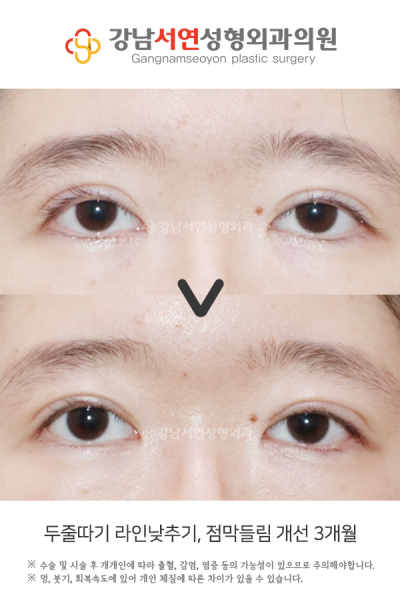
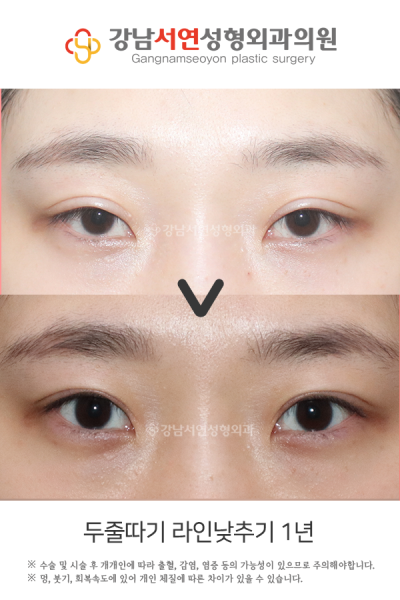
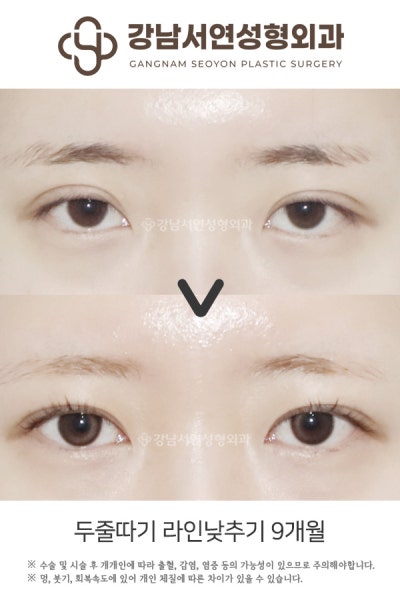
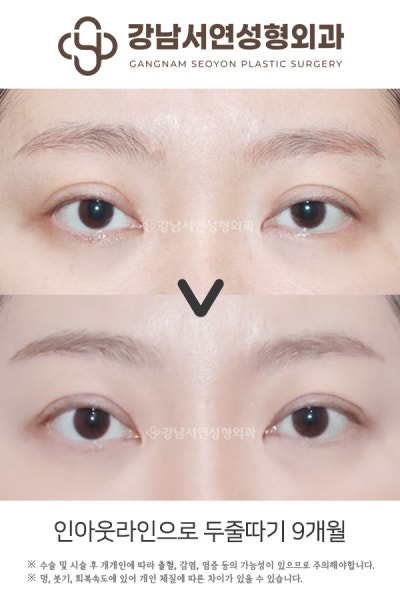
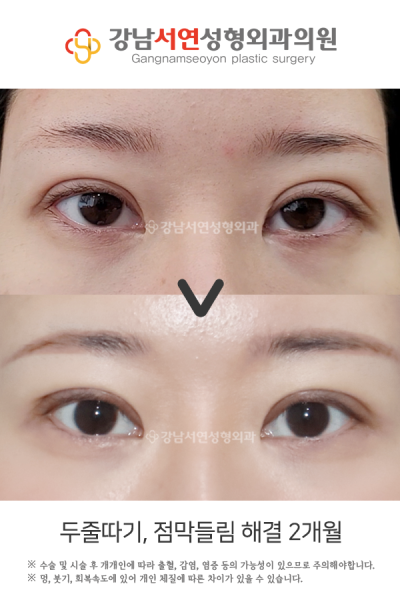
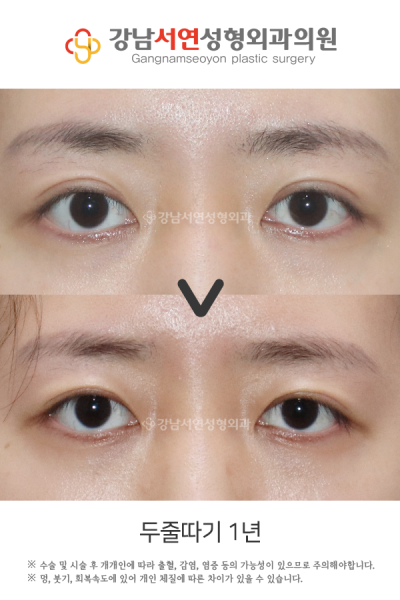
Gangnam Seoyeon Plastic Surgery Clinic complies with the Medical Service Act. The photos in this post were taken under identical conditions and with the patient's prior consent. Please also note that side effects such as bleeding, infection, and inflammation may occur on an individual basis following cosmetic surgery or procedures, so caution is required.
|
- Solo board-certified plastic surgeon chief director system - Accurate assessment of your eye condition / only the necessary surgery is recommended - Operating room CCTV in place |
Feel free to visit and receive a one-on-one consultation
with our board-certified plastic surgeon :)
If you have any questions or would like a consultation,
please leave a comment, contact us via KakaoTalk Plus Friend @Gangnam Seoyeon Plastic Surgery Clinic,
or call 02-535-8889 :)





#DoubleEyelidRevision #EyeSurgeryRevision #BestRevisionClinic #EyeRevisionSpecialist #GangnamPlasticSurgery #GangnamSeoyeonPlasticSurgery #BoardCertifiedPlasticSurgeon #TwoLineTechnique
Frequently Asked Questions
What is the two-line technique?
The two-line technique is a revision method that releases the existing double eyelid crease and creates a new line just below it, so that the eyelid folds along the new line. It's called the two-line technique because it involves making two incision lines.
Is the two-line technique possible for people in their 40s?
Yes, the two-line technique can be performed regardless of age. Anyone troubled by sausage eyes, including those in their 40s, is eligible for the surgery.
Does the two-line technique leave two visible scars?
It's true that two incision marks remain, but the existing surgical scar fades over time and usually isn't as dark as you might worry. However, the worse the condition of the existing scar, the harder it may be to improve.
Why is no tissue excised in the two-line technique?
When tissue is excised during incisional revision surgery, patients who don't have enough skin to spare may develop lagophthalmos (inability to fully close the eyes). The two-line technique creates a new line without excision in order to minimize this side effect.
How should I choose a clinic for the two-line technique?
Because the two-line technique can easily lead to re-adhesion and double creases, it's important to have it performed by a skilled board-certified plastic surgeon. Choose a medical team with extensive revision experience who can accurately assess your eye condition.
Who is the two-line technique suitable for?
The two-line technique is recommended as the best option for those who have undergone multiple revision surgeries or who can no longer have incisional double eyelid revision. It's also well suited to those whose eyes have become sausage-like due to a high crease line from past surgery.